


Faculty of Arts in Benghazi Discusses the File of Libyan Exiles to Italian Islands During the Colonial Period
Pulbished on: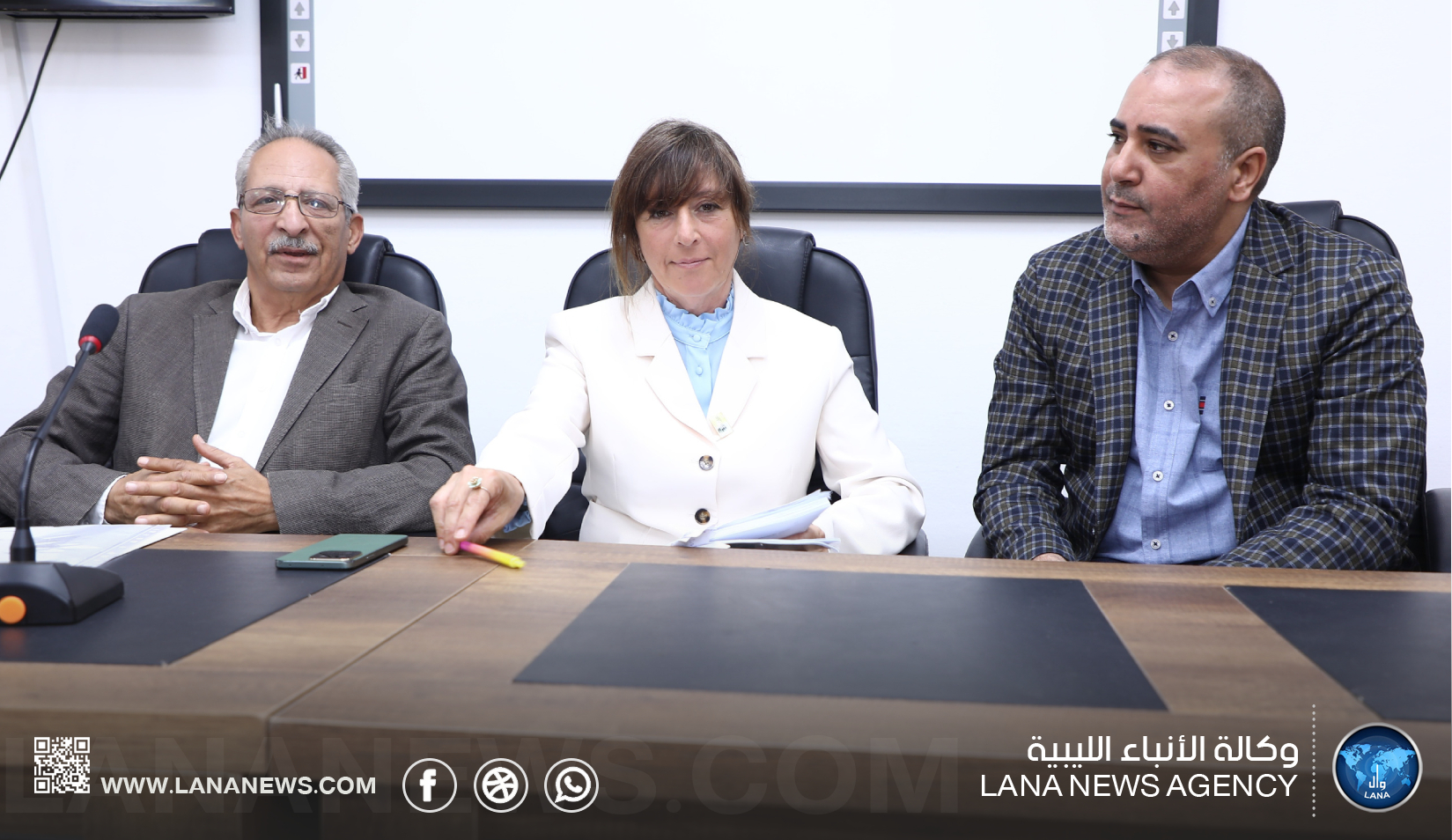
Benghazi, May 17, 2026 (LANA) – The Faculty of Arts at the University of Benghazi hosted Italian researcher Lucia Lorbano, a specialist in the file of Libyan exiles to Italian islands during the Italian colonial period. This event was part of the faculty's scientific and academic activities aimed at discussing historical and humanitarian issues related to Libyan history.
The Dean of the Faculty, Ahmed Najm, stated that the faculty, in cooperation with the Department of History, hosted the Italian researcher as part of the collaboration between the International Relations Office, the Research and Consulting Department, and the Department of History at the Faculty of Arts. The goal is to enhance academic research and exchange scholarly perspectives on shared historical issues.
He explained that the Italian researcher presented, during the symposium, an Italian perspective on the deportation of Libyans during the colonial era, which affected various segments of society, including children, women, and the elderly. He noted that this humanitarian issue still requires further research and study, despite the limited number of publications that have addressed it.
Najm pointed out that Dr. Mustafa Al-Maryami also participated in the symposium, emphasizing that the issue of Libyan exiles still requires further academic, media, and cultural attention, particularly regarding the fate of many of them after their deportation, and whether they returned to Libya or integrated into Italian society.
The Dean of the College explained that the deportations carried out by Italian colonialism are among the most prominent human rights violations, alongside the crimes of detention camps and repressive trials. He clarified that while historically deportations targeted political and military figures, their extension to include civilians, including children and women, gives them humanitarian and legal dimensions that necessitate further research and documentation.
Najm stressed that hosting the Italian researcher comes within the framework of opening a scientific discussion about this historical period and listening to multiple points of view, which contributes to strengthening academic research and revealing more facts related to the period of Italian colonialism in Libya.
=Lana=