


UN mission: Libyan agreement reached in Tunisia on draft law concerning missing persons
Pulbished on: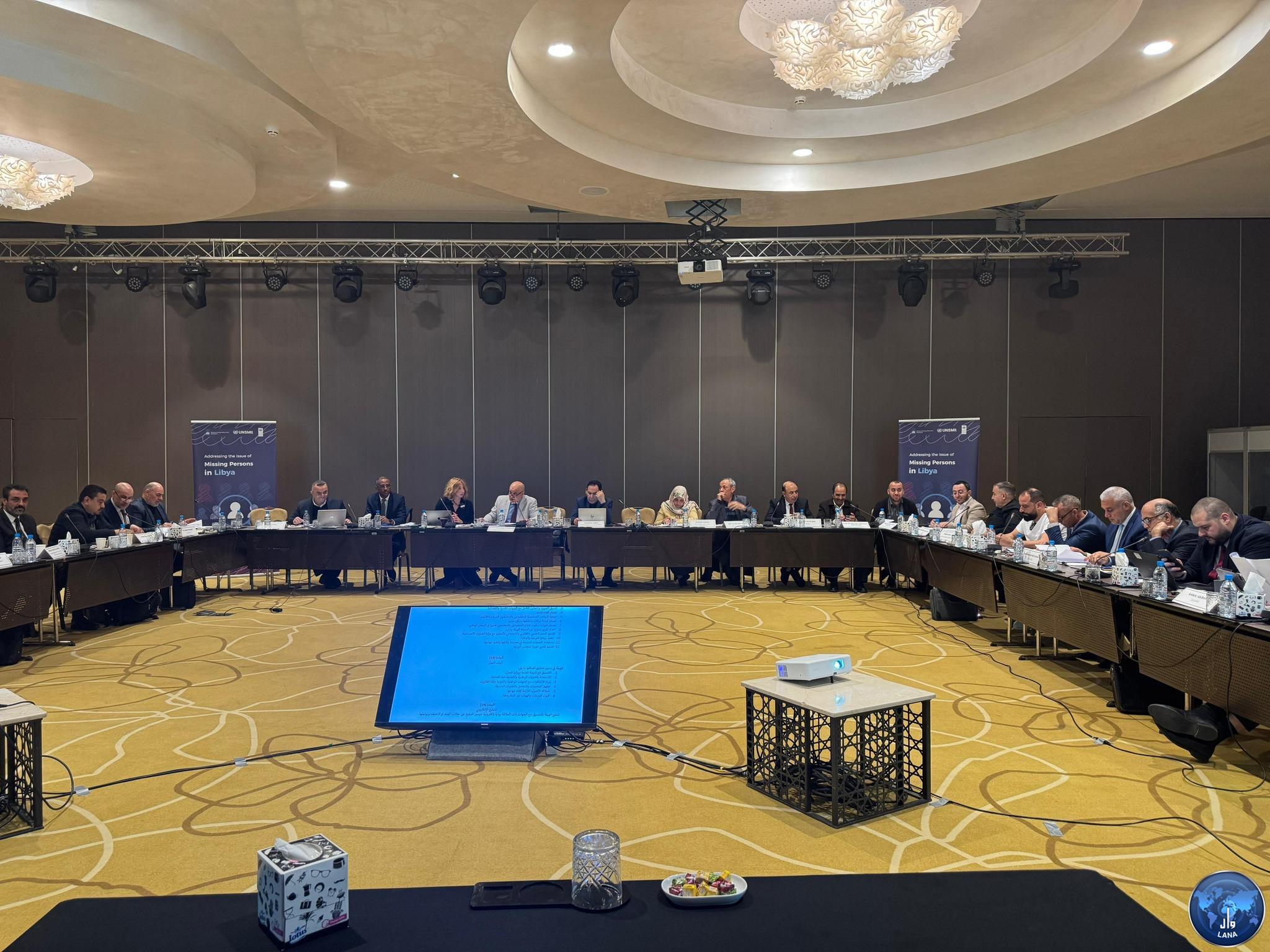
Tripoli, April 9, 2026 (LANA) – The United Nations Support Mission in Libya (UNSMIL) considered the participation of 27 representatives from various state institutions, legal bodies, and civil society organizations in the fifth meeting of the Committee of Experts on the Legal Framework for Missing Persons, held in Tunis on March 27, a significant milestone in the process of developing a comprehensive legal framework to address the issue of missing persons in Libya. The meeting was jointly supported by UNSMIL and the United Nations Development Programme (UNDP).
UNSMIL reported that the meeting, which included participants from the House of Representatives and the High Council of State, as well as representatives from the Government of National Unity, including the Ministries of Justice, Interior, and Foreign Affairs, the Supreme Judicial Council, the General Authority for Search and Identification of Missing Persons, the National Council for Public Liberties and Human Rights, legal experts, and civil society organizations, featured extensive consultations and a thorough assessment of the fragmented legal and institutional landscape in the country, as outlined in the UNDP's report identifying legal gaps.
It was explained that participants engaged in structured discussions over three days to review and improve the draft law, issuing a "near-final version," according to MP Miloud Al-Aswad, a member of the House of Representatives who participated in the meeting. He added that the law would be crucial "for protecting the rights of families and defining the responsibilities of all parties involved in the search and identification of missing persons."
It was noted that through comprehensive dialogue, participants reached a consensus on key amendments aimed at strengthening the independence of the General Authority for Search and Identification of Missing Persons and Victims of Enforced Disappearance, clarifying the criteria for forming its future board of directors, aligning the Libyan legal framework with international standards, strengthening links with judicial and accountability mechanisms, expanding the rights of victims and their families, and providing stronger guarantees for data protection and coordination among forensic institutions through the establishment of a national registry.
The mission quoted Noah Al-Rahil, a family member of a missing person, as saying, “This law will prevent overlapping jurisdictions and address the existing legal loopholes that have prevented Libya from effectively addressing this issue for many years.” Omaima Bawi, a legal advisor who participated in the meeting, emphasized the importance of “adopting strong implementing regulations for the law” to ensure that “the process is protected from politicization and interference, and remains focused on the rights of victims.”
According to the mission, the Deputy Resident Representative of the United Nations Development Programme, Mohamed Saleh, stressed in his closing remarks that the revised draft law that emerged from the meeting is more coherent and comprehensive, and is based on an approach that places victims at the heart of the search for missing and forcibly disappeared persons. This provides a stronger foundation for clarifying institutional jurisdictions, improving coordination among actors in the fields of forensics, the judiciary, and administration, and enhancing Libya’s capacity to search for and identify missing persons within the framework of broader transitional justice and reconciliation efforts.
Saleh said that the adoption of this law by the House of Representatives would represent a crucial step towards restoring confidence, dignity, and hope to countless families across Libya.
At the conclusion of the consultations, the United Nations Support Mission in Libya (UNSMIL) and the United Nations Development Programme (UNDP) reaffirmed their continued support for Libyan institutions in advancing this process, including through ongoing engagement with the legislative authority and support for the subsequent implementation of the law.
...(LANA)...