


A UN discussion on Libya's economic path underscores the importance of transparency and inclusivity in addressing challenges.
Pulbished on: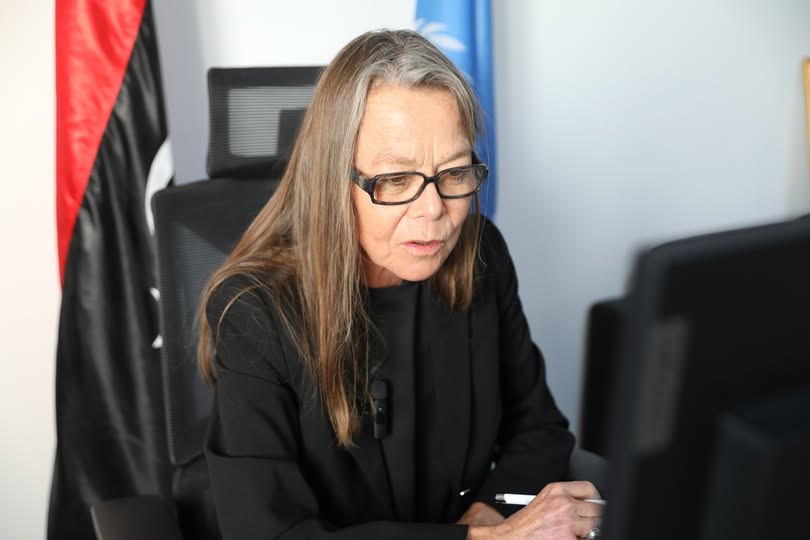
Tripoli, April 7, 2026 (LANA) – The Deputy Special Representative of the Secretary-General and Resident Coordinator in Libya, Ms. Ulrika Richardson, held an online discussion focusing on the role of the economic track within the structured dialogue in formulating recommendations aimed at addressing the most pressing economic challenges and improving the living standards of citizens.
In response to questions regarding the principle of inclusivity in the structured dialogue, Ms. Richardson emphasized that these issues directly affect the daily lives of families and communities, particularly women and youth. She stressed the importance of engaging diverse groups, including persons with disabilities, to ensure genuine Libyan ownership of the dialogue's outcomes. She noted that women's representation in the structured dialogue reached 35%, and pointed out that the United Nations Support Mission in Libya (UNSMIL) established the Libyan Women's Assembly to enhance women's participation in key issues.
Ms. Richardson also explained that dialogue participants emphasized the need to reach effective solutions for managing the country's resources. She stressed the importance of reinvesting revenues in vital sectors such as education, healthcare, and infrastructure, while adopting a more balanced and transparent approach to distributing resources across Libya's various regions. More than sixty participants from across the country took part in the discussion, expressing their concerns about the lack of transparency and limited economic opportunities, particularly for youth and women. They also emphasized the need to diversify the economy and expedite an agreement on a unified budget that ensures a more equitable and effective distribution of resources.
Participants also addressed the role of the United Nations in Libya and raised questions about its efforts to support the country during this critical period.
This session followed a similar discussion held last month on the governance track with the Special Representative of the Secretary-General, Hanna Tetteh. Another session, open to all Libyans, is scheduled for April 16th on the security track with the Deputy Special Representative, Stephanie Khoury.
The economic track is one of four tracks within the structured dialogue, alongside governance, security, national reconciliation, and human rights. This track focuses on providing practical, Libyan-led recommendations to enhance macroeconomic stability, improve the management of natural and sovereign resources, and support economic growth and diversification.
Among his top priorities are developing public financial management, enhancing transparency and oversight, and establishing accountable economic governance, thereby contributing to combating corruption, restoring public trust, and ensuring that state resources are managed in the public interest.
...(LANA)...