


Launch of the second phase of the juvenile justice development project in Libya
Pulbished on: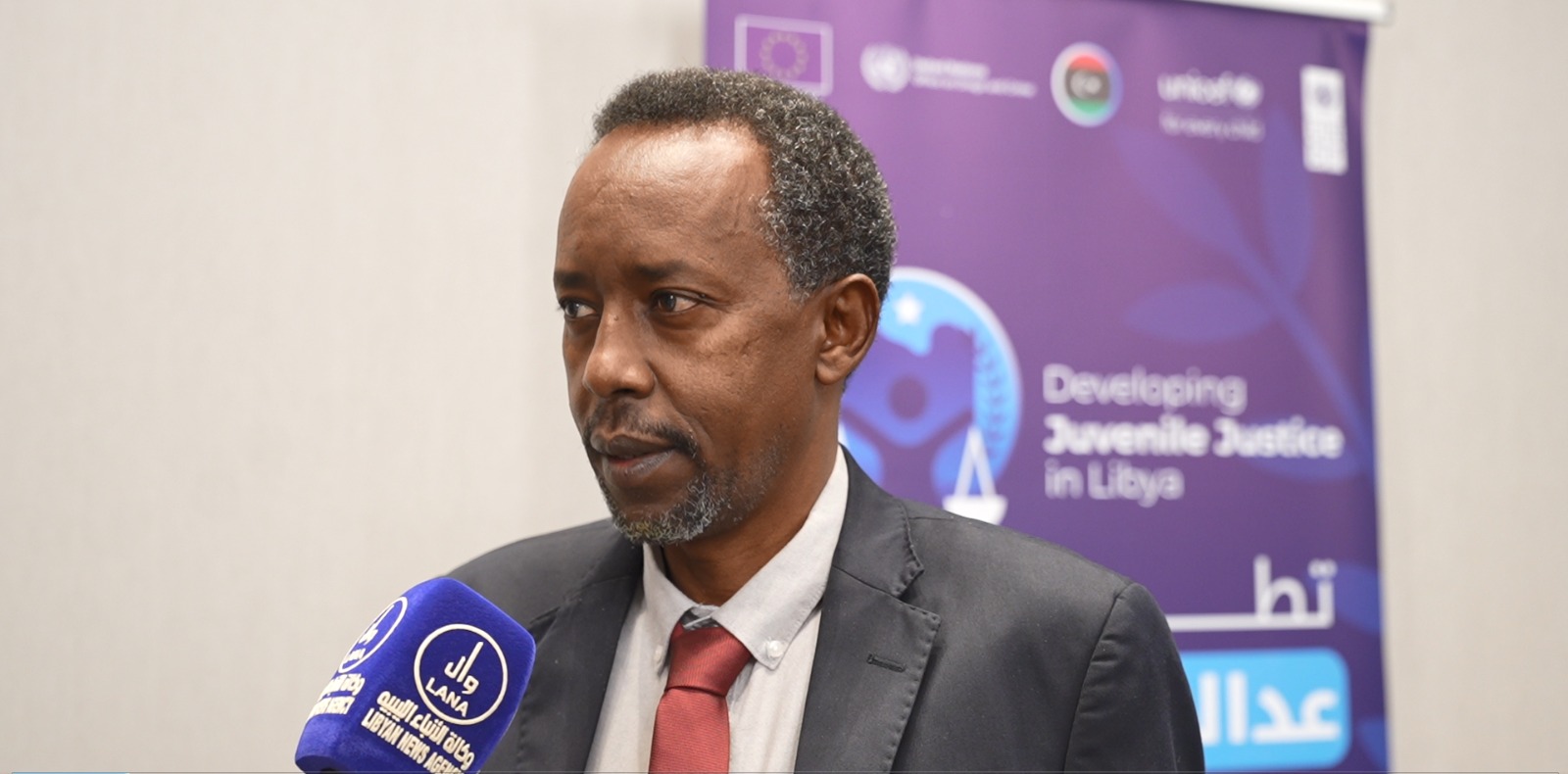
- Reporting: Ismail Al-Kurbo
- Photography: Fathi Shalfit
Tripoli, November 11, 2026 (LANA) – The second phase of a project to develop juvenile justice in Libya was launched today, Wednesday, in the capital, Tripoli. Funded by the European Union, the initiative aims to strengthen the capacities of national institutions and refine the juvenile justice system in alignment with international standards and the Convention on the Rights of the Child.
This new phase builds upon the efforts initiated during the project’s first phase (2020–2024), which saw over 500 children benefit from family and child protection services. Additionally, more than 240 government personnel received training, and child and family protection units were established in Tajoura and Janzour, alongside a family court in Tripoli.
Khaled Salem Fallah, Advisor to the Minister of Justice for Human Rights, stated to the Libyan News Agency (LANA) that the second phase serves as an extension of the achievements of the first, aiming to further develop those outcomes by introducing new programs and projects focused on the protection of children and juveniles and the promotion of their rights.
He explained that while the first phase concentrated primarily on procedural aspects, conducting studies, and drafting programs and plans, the second phase focuses on expanding awareness and education regarding children's rights, enhancing child protection, and implementing specialized, intensive training programs for professionals working within the juvenile justice sector. Fallah added that the new phase will expand the scope of interventions to include cities and regions beyond the capital, Tripoli. This will be achieved by developing juvenile care centers and upgrading their facilities and equipment in accordance with approved standards and specifications, thereby contributing to the rehabilitation of children and their reintegration into society.
For his part, Abdallah Youssef, representative of the United Nations Children's Fund (UNICEF) in Libya, emphasized that the European Union is a key partner in the project, providing financial support for both the first and second phases. He noted that the primary objective is to strengthen national systems and develop the juvenile justice framework to ensure the protection of children's rights.
Youssef explained to the Libyan News Agency (LANA) that Libya is a signatory to the Convention on the Rights of the Child, which guarantees children’s rights. He expressed his hope that the second phase—by enhancing the capacity of national institutions—will contribute to further progress in the field of child protection.
The project is a joint initiative implemented by the United Nations Development Programme (UNDP), UNICEF, and the United Nations Office on Drugs and Crime (UNODC), with support from the European Union. With a budget of three million euros, the project will span three years, from January 2026 to December 2028. It is being carried out in partnership with the Ministries of Justice, Interior, and Social Affairs, the Office of the Prosecutor General, and several other relevant national institutions.
The second phase focuses on three main tracks: strengthening the capacities of institutions involved in juvenile justice and improving their services; enhancing access to justice and legal aid for children and their families; and promoting a culture of children's rights while raising public awareness regarding the principles of juvenile justice and the importance of rehabilitating and reintegrating children into society. The action plan for 2026 includes developing specialized training programs and curricula, supporting child and family protection units and upgrading their facilities, strengthening coordination among relevant stakeholders, developing alternatives to detention, and expanding rehabilitation, psychosocial support, and social reintegration programs. It also encompasses improving detention conditions and raising awareness regarding children’s rights and the mechanisms for their protection.
The project aims to support the Libyan authorities in aligning the juvenile justice system with international standards—most notably the Convention on the Rights of the Child—and to enhance the protection of children who come into contact with the law, ensuring their rights are upheld and facilitating their rehabilitation and reintegration into society.
...(LANA)...