


Al-Baour Emphasizes the Importance of the Community of Sahel-Saharan States
Pulbished on: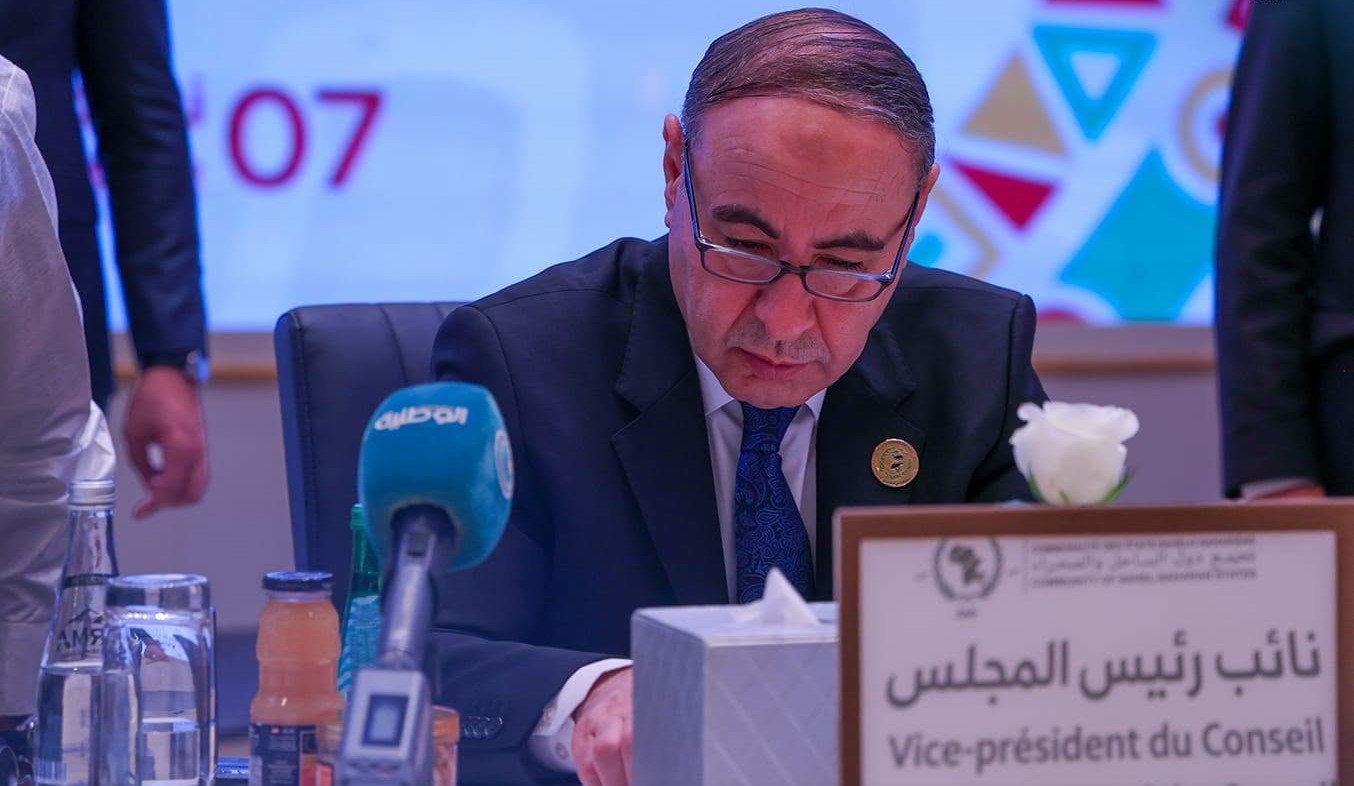
Tripoli, November 7, 2026 (WAL) – Taher Al-Baour, Acting Minister of Foreign Affairs and International Cooperation and Vice-President of the Executive Council of the Community of Sahel-Saharan States (CEN-SAD), affirmed Libya's deep commitment to the organization since its inception. He highlighted Libya's role in hosting its headquarters and contributing to the establishment of its institutions, most notably the Sahel-Saharan Bank for Investment and Trade, as well as its advocacy for the organization's objectives and the aspirations of its people in African and international forums.
In his address to the 22nd Ordinary Session of the Executive Council of the Assembly in Tripoli on Saturday, he stated that the circumstances Libya has faced since 2011 forced the Assembly to relocate from its headquarters for approximately 15 years. He described this as a wound for Libya and a loss for the Assembly, emphasizing that Libya has never relinquished its position or responsibility towards the Assembly.
He reviewed the efforts to rehabilitate the Assembly's headquarters, which resumed its operations on April 11th, in the presence of a large number of ministers from member states. He noted that the assessment mission appointed by the Executive Council confirmed last September that the headquarters met all the necessary requirements to commence its work.
According to the Ministry of Foreign Affairs, Al-Baour pointed to the 2026 Global Terrorism Index, which indicated that the region topped the list of areas most affected by terrorism worldwide, accounting for nearly half of all deaths resulting from terrorist attacks globally in 2025.
He also addressed the deteriorating humanitarian situation in Sudan, a founding member of the Assembly, due to the ongoing war and the resulting one of the most severe humanitarian crises of our time.
In this context Emphasizing the close link between the security and stability of the region's countries, he stressed that Libya is not immune to the repercussions of these challenges, stating, "What happens in Khartoum, Niamey, or N'Djamena resonates in Kufra, Sabha, and Tripoli."
He referred to data from the International Organization for Migration (IOM), which indicates the presence of approximately 944,000 migrants in Libya, representing 44 nationalities, including more than 325,000 Sudanese. He affirmed that Libya welcomes them based on its deeply rooted values and the bonds of brotherhood and good neighborliness, while emphasizing that managing migration is a shared responsibility that should not be borne by a single transit or destination country.
He explained that these figures reflect the interconnectedness of Libya's stability and the stability of the Sahel region, and that the security of the region's countries requires robust cooperation and genuine solidarity. He pointed to the growing strategic importance of the grouping, given the transformations occurring within regional frameworks on the African continent, and its geographical reach and historical and human connections linking North Africa to the Sahel, the Horn of Africa, and West Africa. Africa.
Libya expressed its aspiration for the organization to fulfill its role as a bridge for communication and integration, and a framework for unifying efforts and safeguarding common interests. It emphasized that Libya places the organization at the heart of its African policy and reaffirmed its commitment to supporting its institutions and activating its role.
The Acting Minister and Vice-President of the Executive Council also outlined five priorities that Libya seeks to advance within the framework of the organization, beginning with the priority of border security. He stressed the necessity of preventing desert regions from becoming havens for terrorist groups and networks involved in arms and drug smuggling and human trafficking.
Libya reiterated its support for expediting the adoption of the protocol concerning the establishment of a counter-terrorism center, enhancing cooperation among relevant agencies, exchanging information, and coordinating efforts to monitor shared borders.
The session's proceedings address several agenda items related to strengthening the organization's role, developing its institutions and working mechanisms, and following up on the implementation of previous decisions and recommendations. It also explores ways to enhance cooperation among member states and coordinate positions on regional and international issues and challenges of common interest.
The session is expected to conclude with the adoption of a number of resolutions. Decisions and recommendations that would support the progress of the assembly and enhance its effectiveness in achieving its goals and the aspirations of the peoples of its member states.
=Lana=