


The House of Representatives hosts a consultative meeting to discuss the economic crisis in Libya, with the participation of experts and economists
Pulbished on: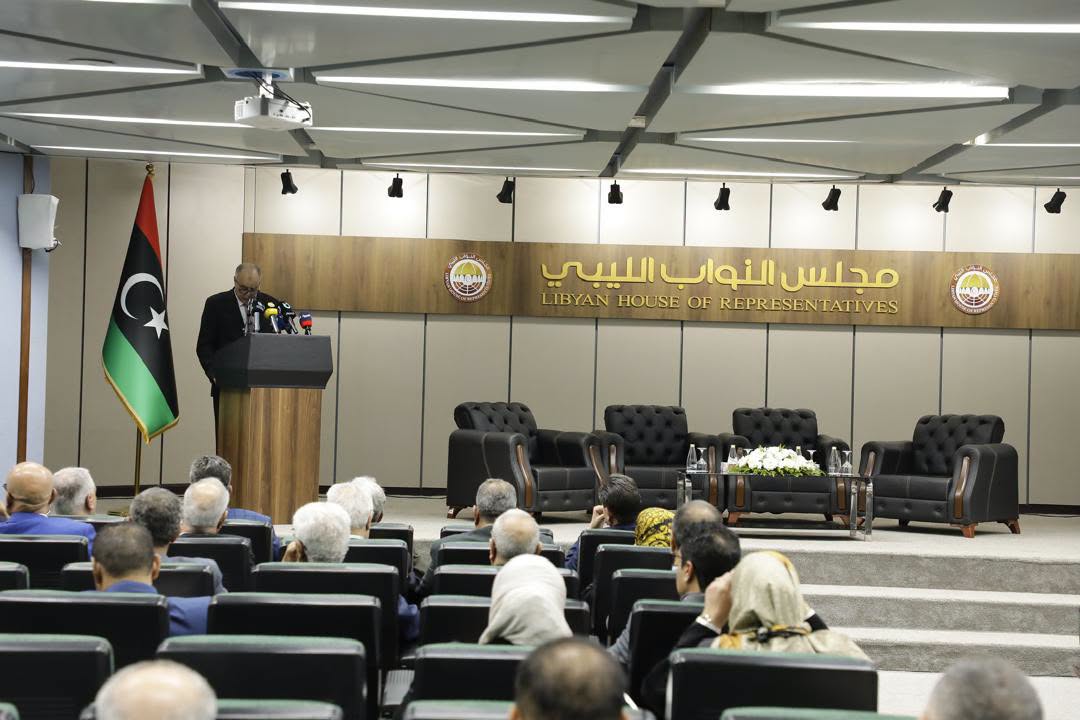
Benghazi, November 4, 2026 (LANA) – Experts and economists, during a consultative meeting on the current economic crisis in Libya, called for unifying the general budget, controlling government spending, reviewing public expenditures, and addressing imbalances related to the management of oil resources and foreign currency. They emphasized that these measures would contribute to strengthening economic stability and improving the living conditions of citizens.
These calls were made during a meeting hosted by the House of Representatives, at the invitation of Speaker Saleh Abdul Nabi, and in coordination with the National Planning Council. A number of experts and economists from across the country participated.
Dr. Ahmed Menisi Abdul Hamid, former Governor of the Central Bank of Libya and former Minister of Finance, stressed that the current stage requires moving from diagnosing economic imbalances to developing a practical program for implementing solutions. He noted that Libyan experts and economists had previously presented studies and proposals regarding the challenges facing the national economy through the Libyan Economists Association and the economics faculties at Libyan universities.
During the consultative meeting on the economic crisis, Munisi expressed his appreciation for the Speaker of the House of Representatives' attention to the economic situation and his invitation to experts to contribute to the development of a reform plan. He emphasized the need to expedite the implementation of solutions, given the challenges facing the country.
He pointed out that Libya possesses untapped economic resources, representing an opportunity that can be utilized in developing a practical plan to address current imbalances and improve the economic situation.
For his part, Dr. Hilmi Ahmed Al-Qamati, Head of the Economics Department at the University of Benghazi, explained that the first session of the meeting addressed several economic issues, most notably the imbalances in the general budget and the necessity of unifying it, as well as the importance of having a single government to manage public spending.
Al-Qamati indicated that addressing living conditions requires assessing actual income levels. He noted that the poverty rate is estimated at approximately 44 percent, as he stated during his intervention, while the minimum income, according to his estimate, ranges between 2,000 and 2,500 dinars, when calculated to reflect actual needs.
He addressed the irregularities related to letters of credit, pointing to practices such as some merchants failing to deliver goods against the credits granted to them, and the exploitation of foreign currency for speculation in the exchange market, and the resulting repercussions on market stability and the national economy.
He also discussed the issue of crude oil-for-fuel swaps, considering this mechanism a burden on the economy. He emphasized the importance of establishing new refineries within Libya to reduce reliance on oil-for-fuel swaps and meet the needs of the local market.
Regarding public spending, Al-Qumati called for a review of expenditures that drain foreign currency reserves, specifically mentioning the expenses of diplomatic missions and commercial, cultural, and health attachés in several countries. He stressed the need to reconsider these expenditures, particularly in countries where there are no Libyan communities or interests that justify continuing this level of spending.
He stressed that addressing the financial imbalances requires unifying executive and financial institutions through a single government, a unified general budget, and development spending under unified management. He explained that the Central Bank of Libya's dealings with two governments lead to fragmented and expanded spending, making it difficult to control public resources and expenditures.
The discussions at the consultative meeting addressed a range of economic and financial challenges requiring practical solutions. These solutions focus on unifying the general budget, rationalizing spending, and improving resource management, thereby strengthening financial and economic stability and mitigating the impact of existing imbalances on citizens' living conditions.
...(LANA-Benghazi)...