


With international participation: Gap analysis workshop for the "Early Warnings for All" roadmap launched in Tripoli.
Pulbished on: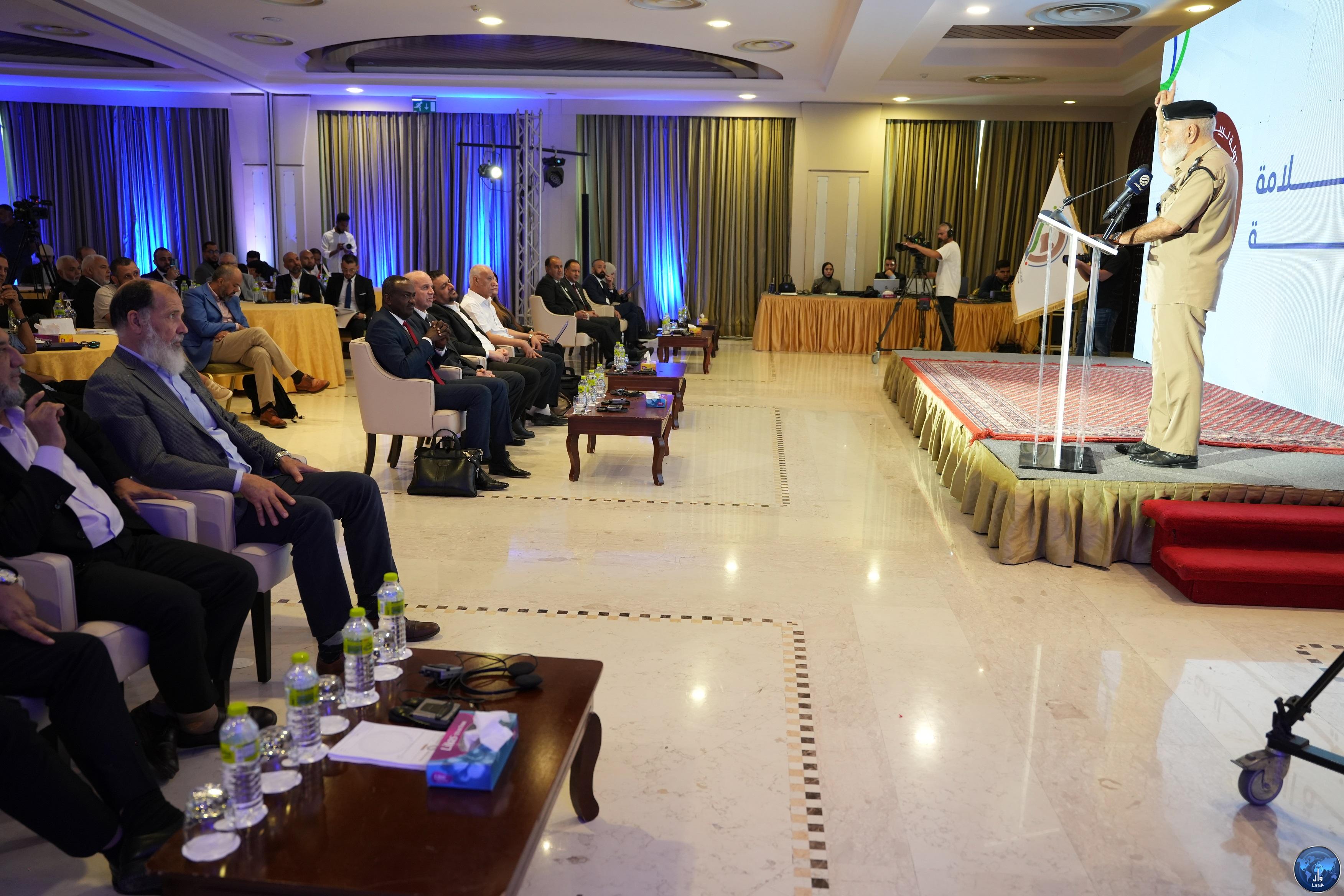
Reporting: Ismail Al-Korbo
Photography: Fathi Shalfit
Tripoli, September 29, 2026 (LANA) – The National Center for Emergency, Crisis, and Disaster Management launched a technical workshop in Tripoli today, Tuesday. The event focuses on gap analysis and the launch of the national roadmap for the "Early Warning for All" initiative in Libya, with the participation of various national sectors, agencies, and international partners.
The three-day workshop aims to lay the groundwork for a comprehensive early warning system covering all types of hazards and disasters. This involves assessing existing capabilities, identifying operational and technical gaps, and coordinating response efforts among various state institutions and humanitarian organizations.
Brigadier General Suleiman Shanbar, Director of the Response Operations and Early Warning Department at the Center, stated to the Libyan News Agency (LANA) that the workshop's primary goal is to establish a clear roadmap. This roadmap will define the responsibilities of monitoring bodies, outline the preparation of warning bulletins, and set up coordination mechanisms to ensure timely delivery of messages to citizens.
Shanbar explained that past challenges faced by teams included poor coordination and fragmented, individual efforts among agencies. He noted that work is currently underway to unify response efforts and information flow through a single national operations room, ensuring speed and efficiency in handling emergencies to minimize loss of life and property. Malik Marsit, the official spokesperson for the Emergency Medicine and Support Center (EMSC), explained to the Libyan News Agency (LANA) that the workshop aims to enhance the capabilities of rescue and meteorological teams and to coordinate proactive, emergency, and relief services. He cited recent operations carried out by the Center in the towns of Mizdah and Nesma, as well as other areas affected by torrents and floods.
Marsit added that while national personnel possess the necessary expertise and field training to deliver services effectively, challenges often arise from rugged terrain and communication outages during disasters. He emphasized the importance of an integrated early warning system to clearly guide the operations of all sectors.
For his part, Mohamed Al-Barqaei—a meteorologist representing the National Meteorological Center—noted that while the Center boasts highly experienced technical staff, it suffers from a shortage of monitoring stations and a lack of weather radars, necessitating financial and technical support to upgrade forecasting and monitoring operations.
Al-Barqaei identified the primary current challenge as closing the gap between the issuance of weather warnings and their delivery to the end-user (the citizen). He emphasized that the workshop aims to address overlapping mandates among various entities, establish a unified risk registry, and define national priorities. The workshop proceedings include visual and illustrative presentations to assess the current state of the warning system, in coordination with the Ministries of Water Resources and Health, the General Authority for Communications, the National Center for Disease Control, the Libyan Center for Remote Sensing and Space Science, the Emergency Medicine and Support Center, the National Safety Authority, the Libyan Red Crescent, and relevant security and service agencies.
...(LANA)...