


House of Representatives Office Hosts Academic Conference on Public Service Ethics in Libya
Pulbished on: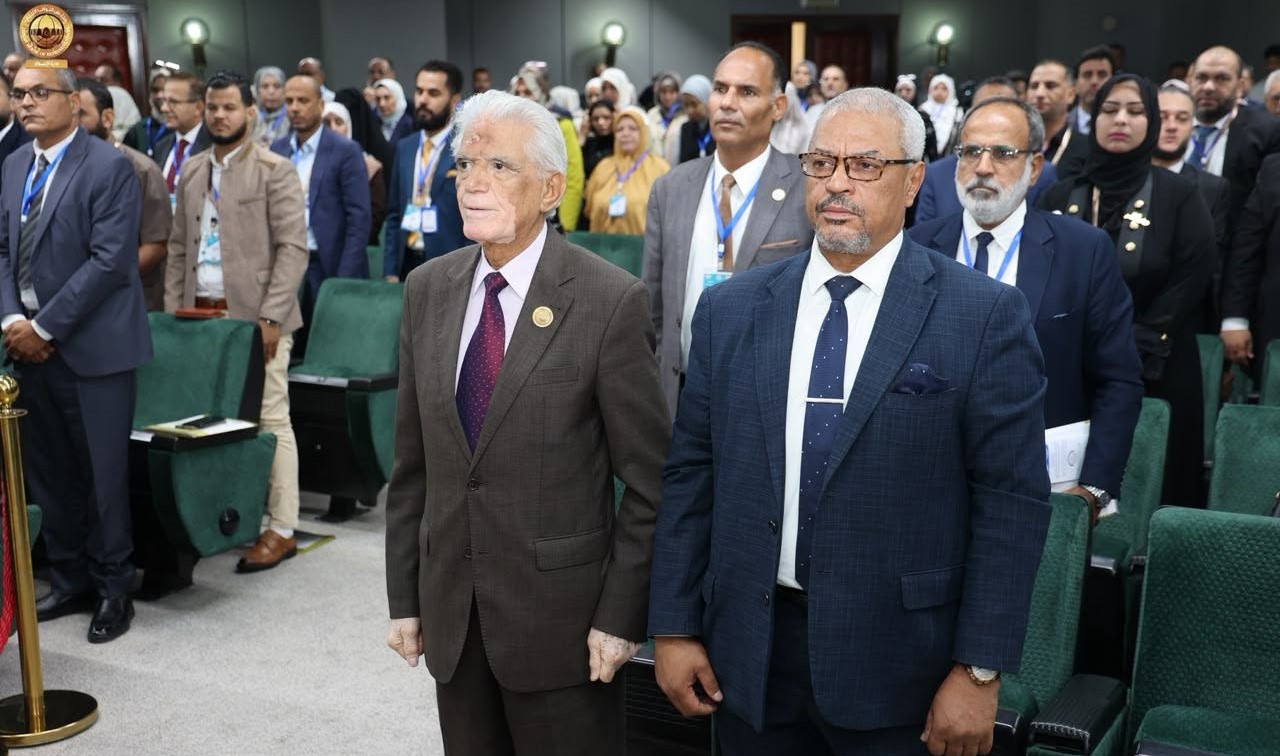
Benghazi, September 27, 2026 (LANA) – The proceedings of the peer-reviewed academic conference titled "Public Service Ethics in Libya: Practices and Aspirations" began yesterday, Saturday, at the House of Representatives office in Benghazi. Organized by the Center for Public Administration and Institutional Development at the University of Benghazi, the event sees the participation of faculty members, researchers, academics, and specialists from various Libyan universities.
The two-day conference explores ways to embed public service ethics, enhance integrity and transparency, and improve administrative and institutional performance. It also addresses issues related to corruption, professional rectitude, oversight, and adherence to legal and professional obligations.
The opening ceremony was attended by Member of Parliament Ibrahim Al-Zaghid; the Acting Head of the House of Representatives Office, Rasmi Bal-Ruwain; the Vice President for Scientific Affairs at the University of Benghazi, Dr. Khaled Al-Fadli; the Director of the Center for Public Administration and Institutional Development and Conference Chair, Bashir Al-Abbar; and the Director of the Civil Service Bureau’s Eastern Region branch, Saleh Karkara; alongside numerous researchers and academics.
In his opening remarks, MP Ibrahim Al-Zaghid emphasized that public service ethics form the foundation for state-building and the enhancement of the state's prestige. He noted that trustworthiness, honesty, justice, and dedication are fundamental values in discharging public responsibilities and serving citizens. Al-Zagheid explained that addressing the imbalances affecting the concept of public service in recent years requires strengthening the system of professional and ethical values and standards. He affirmed that the House of Representatives would give due attention to the conference's recommendations, thereby contributing to the development of legislation and regulations governing public service.
For his part, Rasmi Balrowin, the Acting Head of the House of Representatives' Administrative Office, noted that public service represents the face of the state. He emphasized the importance of linking public work to value and time, and the necessity for services provided to citizens to be delivered effectively and in a timely manner.
Balrowin underscored the importance of utilizing the research and studies presented at the conference to support decision-making and translating their findings into action plans that benefit both the citizen and the nation.
Meanwhile, Dr. Khaled Al-Fadli, the Vice President for Scientific Affairs at the University of Benghazi—speaking on behalf of the University President—affirmed that public service is a fundamental pillar for the smooth functioning of public facilities and the delivery of services to citizens. He highlighted the importance of embedding transparency and integrity and enhancing administrative performance by linking professional practice with academic research.
The first day of the conference featured three academic sessions covering various research topics and studies. These included the ethical climate and organizational integrity; priorities for adhering to public service ethics within the Libyan accounting environment; the relationship between anti-corruption efforts and government performance; the impact of corruption on economic growth; and the interplay between legal obligations and professional requirements. The conference sessions also addressed the state of professional integrity within public institutions, the reframing of public service ethics as an anti-corruption framework, the quality of oversight practices and their link to adherence to work ethics, and the impact of "professional drift" on the effectiveness of criminal justice. Furthermore, discussions covered the limits of administrative discretion and their implications for public service ethics and the conduct of public officials in Libya.
The first day’s proceedings concluded with a panel discussion titled "The Code of Ethics of the University of Benghazi: Values, Practices, and Implementation Mechanisms," featuring the participation of faculty members from various Libyan universities.
=Lana=