


Specialized Training on Environmental and Human Rights Monitoring Held in Tripoli, with the Participation of the National Council for Freedoms and Human Rights and UNDP
Pulbished on: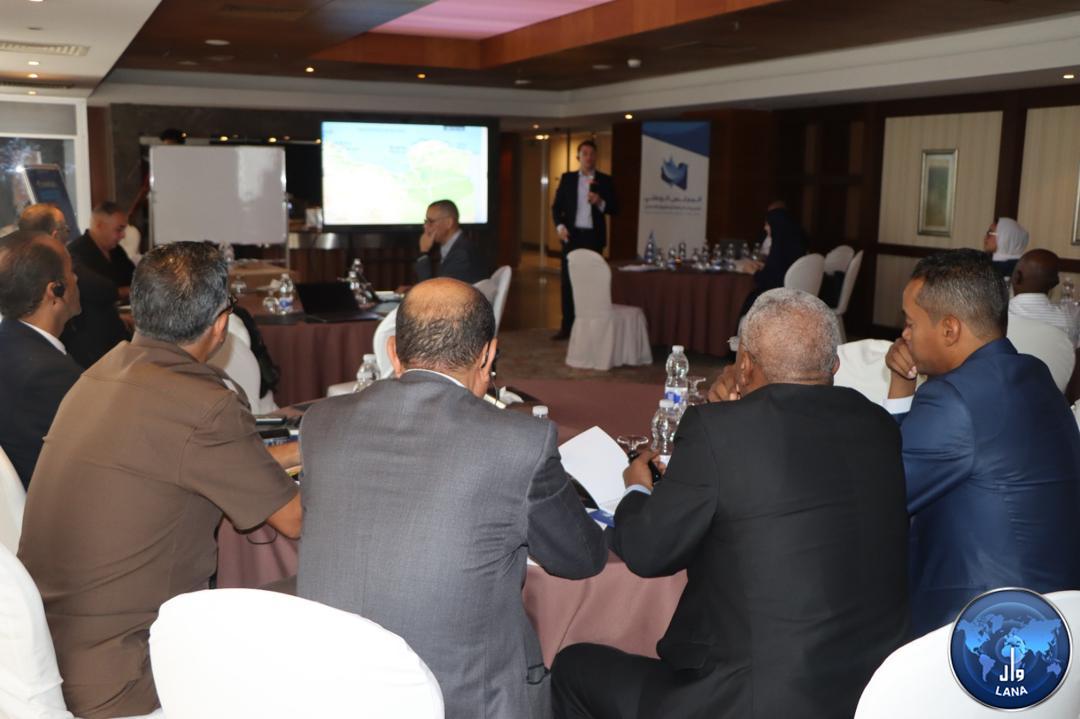
Coverage and photography: Naima Al-Misrati
Tripoli, September 20, 2026 (LANA) – The specialized training program on “Enhancing Human Rights-Based Environmental Monitoring for National Institutions” began this Sunday morning in the capital, Tripoli. The program is organized by the National Council for Freedoms and Human Rights, with technical cooperation and support from the United Nations Development Programme (UNDP) – Rule of Law and Human Rights Project, and will continue for three days.
The program primarily targets employees of the National Council for Freedoms and Human Rights from various regions, along with a number of employees from the Council’s administrative office, as well as representatives from the Human Rights Office at the Ministry of Interior and the Environmental Police. This comes within the framework of strengthening national capacities related to monitoring, documentation, and the protection of rights.
The program opened with a speech delivered by Salem Al-Tayeb, Director of the International Cooperation Department at the National Council for Freedoms and Human Rights. He welcomed the participants and the Council’s partners from the United Nations Development Programme, emphasizing the importance of the program in developing national capacities in monitoring environmental issues from a human rights perspective.
Al-Tayeb explained that the organization of the program comes within the Council’s recognition of the close relationship between the environment and the enjoyment of human rights, noting that environmental risks do not affect only developmental or technical aspects, but also extend to a number of fundamental rights, including the right to life, health, water, food, and adequate housing, as well as the right to access information and participate in public affairs.
He noted that the Council places importance on strengthening an evidence-based monitoring methodology by developing skills in collecting, verifying, analyzing, and documenting information, with the aim of producing accurate and objective human rights and environmental reports that can be relied upon for follow-up, the preparation of recommendations, and support for public policies.
For his part, Hossam Sahab, Director of the Rule of Law and Human Rights Project at the United Nations Development Programme (UNDP), emphasized that addressing environmental issues from a human rights perspective is an emerging field that requires the development of the necessary knowledge and practical tools for monitoring and follow-up.
He explained that the program aims to present general principles and approaches related to environmental rights, with a focus on practical aspects and monitoring mechanisms. He noted that the three-day training represents a first step that can be built upon through subsequent, more specialized training programs and activities.
He also highlighted the importance of benefiting from the expertise of the international trainer participating in the program and working to develop the capacities of participants from various institutions and structures concerned with environmental and human rights issues.
For his part, Dr. Sean O’Connell, Rule of Law and Human Rights Specialist with the United Nations Development Programme (UNDP) Global Team in Geneva, welcomed the participants, expressing his pleasure at visiting Libya for the first time and appreciating the invitation from the National Council for Freedoms and Human Rights and the partnership in organizing the program.
O’Connell explained that human rights and environmental issues are relatively new fields, noting that the program brings together specialized expertise in the environment and human rights with the aim of establishing common ground between the two fields and developing participants’ understanding of the relationship between environmental issues and fundamental rights.
He emphasized that throughout the three days, the program will focus on practical aspects alongside basic concepts and principles, helping participants develop their skills in monitoring environmental issues from a human rights perspective and making use of the tools and methodologies available in this field.
He also called on participants to engage, participate, and exchange experiences throughout the program and to benefit from available international expertise, contributing to the development of specialized national capacities in human rights-based environmental monitoring.
On its first day, the program included a presentation on the environmental situation in Libya delivered by Dr. Ali Al-Muntasir, Head of the Energy and Environment Team at the United Nations Development Programme (UNDP). The presentation addressed the most prominent environmental issues and challenges in Libya and their implications for development and fundamental rights.
The training sessions were delivered by Dr. Sean O’Connell, Rule of Law and Human Rights Specialist with the UNDP Global Programme, based in Geneva. He explained that the training focuses on developing practical and methodological skills in the field of human rights-based environmental monitoring.
The program covers a number of topics, including human rights concepts and foundations, analysis of the environmental situation in Libya, environmental justice and the right to a healthy environment, the relevant international framework concerning the Paris Principles, environmental treaties, and human rights law, as well as monitoring principles based on a rights-based approach, the principle of doing no harm, and impartiality.
On its second day, the program will also introduce monitoring tools and templates, apply a problem tree analysis to the right to a healthy environment through group work, and facilitate an exchange of experiences on human rights and environmental issues, in addition to practical exercises and simulations for identifying priority environmental issues.
The National Council for Freedoms and Human Rights told LANA that organizing this program comes within the framework of its mandated responsibilities and competencies in protecting and promoting human rights and fundamental freedoms, including monitoring issues related to environmental rights, which fall under the third generation of human rights, and strengthening monitoring and documentation tools and the preparation of related reports.
The Council noted that the program aims to enable participants to monitor and document the human rights impacts of environmental issues in a more systematic manner, while strengthening cooperation and the exchange of expertise among relevant national authorities. This contributes to developing the Council’s evidence-based monitoring capacities and supporting the preparation of recommendations and policies related to the protection of human rights and the environment.
The training program will continue for three days, with the participation of a group of specialists and concerned employees, as part of the ongoing partnership between the National Council for Freedoms and Human Rights and the United Nations Development Programme, and in support of efforts to develop national capacities in human rights and environmental monitoring.
...(LANA)...