


On the 95th Anniversary of His Martyrdom: Omar Al-Mukhtar Retains His Place in the National Memory
Pulbished on: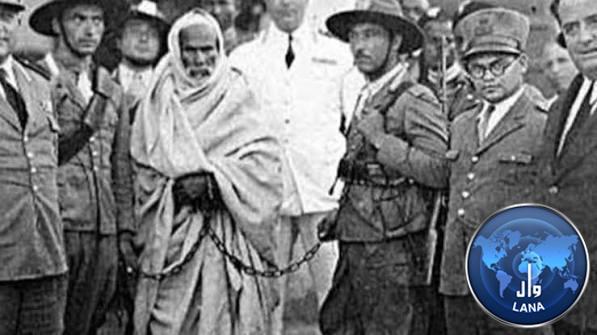
Report by Soma Harb
Benghazi, September 16, 2026 (LANA) – Every year on September 16, the Libyan national memory revisits the final chapters of the journey of the "Sheikh of Martyrs," Omar Al-Mukhtar. He was executed on September 16, 1931, following years of leading the resistance against the Italian occupation.
Commemorating Al-Mukhtar’s martyrdom brings to mind the details of his capture, trial, and execution, as well as events linked to the final phase of his resistance. Among these is the story of his spectacles, which fell during a battle and subsequently became a symbolic detail associated with his legacy in the Libyan collective memory.
- The Spectacles: A Detail from the Resistance Battles
Italian efforts to pursue Omar Al-Mukhtar intensified during the final years of the resistance in the Green Mountain (Jebel Akhdar). His forces engaged in continuous clashes with Italian troops, who had stepped up military operations to hunt him down and crush the resistance movement.
During one of these battles, Al-Mukhtar’s field spectacles fell and were discovered by Italian soldiers; they later resurfaced during the confrontation between Al-Mukhtar and the Italian military command.
Historical accounts indicate that when Al-Mukhtar was confronted with the spectacles at the Italian headquarters, he acknowledged they belonged to him and admitted they had fallen during the battle, all while displaying no signs of wavering or defeat.
Over time, this incident became part of the popular and national narrative surrounding Al-Mukhtar’s life. It serves as a detail reflecting the nature of the confrontation—a struggle that was not limited to the military realm but extended to an attempt to break the resistance leader's will. - From Captivity to Trial
On September 11, 1931, Omar Al-Mukhtar was captured following a clash with Italian forces in the Bunzarkiyah area. His horse was wounded, causing him to fall and be seized by Italian troops. He was transported to Benghazi, where he underwent a swift military trial that resulted in a death sentence.
Throughout his captivity and trial, Al-Mukhtar maintained his steadfast opposition to the Italian occupation and remained committed to the resistance, despite knowing that the verdict meant his end.
Historical sources recount a meeting between him and Marshal Rodolfo Graziani—commander of the Italian forces in Libya—during his captivity. This encounter highlighted the stark contrast between the captured resistance leader and the military command controlling the country.
Despite the circumstances of his captivity, Al-Mukhtar remained calm and resolute—an image that has become an enduring part of his legacy in Libya's national memory.
- The End of a Man, the Survival of a Symbol
On the morning of September 16, 1931, the death sentence was carried out against Omar Al-Mukhtar at the Soluq detention center, in the presence of Libyans whom the occupation authorities had forced to witness the execution.
The occupation authorities intended for Al-Mukhtar’s execution to mark the end of the resistance movement he had led for years; however, over time, his martyrdom transformed into a powerful symbol of the Libyan national struggle.
September 16 has since become an annual occasion for Libyans to commemorate the legacy of Al-Mukhtar and his comrades, as well as the battles, displacement, arrests, detention camps, and exiles that the country endured during the Italian occupation.
- Omar Al-Mukhtar in the National Memory
The Director-General of the Al-Salam Cultural Center in Benghazi, Dr. ... In a statement to the Libyan News Agency marking the anniversary of September 16, Faraj Najm noted that Omar Al-Mukhtar is a figure who commands broad consensus among Libyans, both at home and abroad.
He added that referring to Libyans in the diaspora as "Al-Mukhtar’s descendants" reflects the significant place Al-Mukhtar holds in the national consciousness and his role as a source of pride in Libyan identity. He explained that commemorating Al-Mukhtar’s martyrdom goes beyond merely remembering the man himself; it also honors his comrades and the people of the regions, tribes, cities, and villages that supported the resistance against the Italian occupation.
He pointed out that this era was marked by widespread suffering—including combat, forced displacement, detention, exile, and execution—yet emphasized that Al-Mukhtar’s legacy has endured as an integral part of Libya’s national memory.
He noted that Omar Al-Mukhtar helped solidify a unifying concept of national identity; while many political and historical figures may be subjects of disagreement or controversy, Al-Mukhtar has remained, in the Libyan memory, a unifying symbol of resistance and sacrifice.
- A Legacy Beyond the Battlefield
Ninety-five years after his martyrdom, the story of Omar Al-Mukhtar remains alive in the Libyan memory—not only as the leader of the resistance against the Italian occupation but also as a symbol of steadfastness, sacrifice, and devotion to the homeland.
From the details of his battles, capture, and trial to the moment of his execution in the town of Saluq, Al-Mukhtar’s legacy has endured across generations. Meanwhile, details associated with his final days—such as the story of the spectacles that fell on the battlefield—have transformed into symbols revisited each year on the anniversary of September 16. This anniversary remains an occasion to reflect on a pivotal period in Libya’s modern history, to honor those who resisted the Italian occupation, and to acknowledge the enduring impact that era has left on the Libyan national memory.
...(LANA)...