


With the Participation of International Experts: National Economic and Social Development Council Holds Event on Libya’s Food Security Emergency Response Plan
Pulbished on: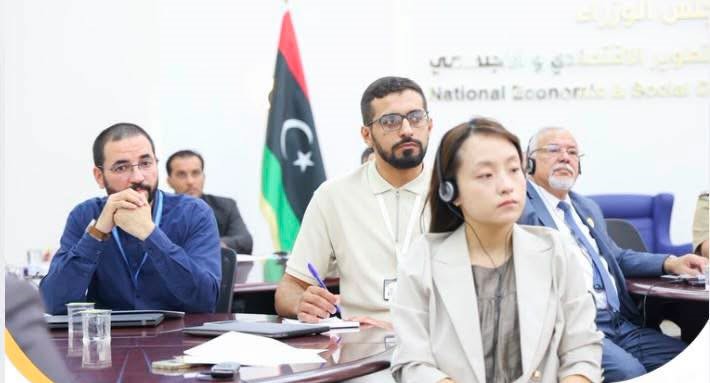
Tripoli, September 6, 2026 (LANA) — The National Economic and Social Development Council, in cooperation with the Islamic Organization for Food Security, held an event to review and discuss the results and outputs of the Food Security Project in Libya, with the participation of a number of national entities and institutions, as well as representatives of relevant international organizations and institutions.
The event, held in Tripoli, was attended by a representative of the Ministry of Finance and a representative of the Islamic Development Bank, along with the Assistant Director-General of the Food and Agriculture Organization of the United Nations (FAO) and Regional Representative for the Near East and North Africa Region, the Resident Representative of the United Nations Development Programme (UNDP) in Libya, and representatives of the United Nations Children’s Fund (UNICEF). Representatives of the African Development Bank and the Head of the Programs Department at the Islamic Organization for Food Security also participated via Zoom.
The event reviewed the project’s key outputs, including the Executive Report on Activating the National Model for Food Security Emergency Response in Libya and the Executive Report on the Methodological Framework for Designing a Healthy Food Basket Based on the Cost of a Healthy Diet.
The participants also discussed the extent to which these outputs align with national priorities and needs, as well as ways to benefit from and utilize them. They further examined mechanisms for coordination and cooperation between national entities and international organizations, and ways to draw on technical expertise and international best practices in developing Libya’s food security system.
Participants emphasized the importance of moving from the stage of preparing studies and reports to utilizing the project’s outputs and translating them into practical, implementable measures and programs. This would enhance the effectiveness of national food security policies, support efforts to respond to food emergencies, and contribute to improving citizens’ access to healthy and sustainable diets.
The broad participation of national entities and international organizations also highlighted the importance of partnership, coordination, and the integration of efforts in supporting food security, as well as maximizing the benefits of technical and international cooperation in line with national priorities and needs and in support of Libya’s sustainable development path.
The event was held as part of the Council’s efforts to support and strengthen Libya’s food security system and to benefit from the outputs of the technical grant for food security provided by the Islamic Development Bank through the Ministry of Finance, and implemented jointly with the Islamic Organization for Food Security. The initiative aims to support the development of relevant national policies and programs and strengthen the capacity of national institutions to address food security challenges.
...(LANA)...