


Dialogue Sessions on Health, the Economy, and Digital Transformation Held as Part of the Libya Experts Forum in Tripoli
Pulbished on: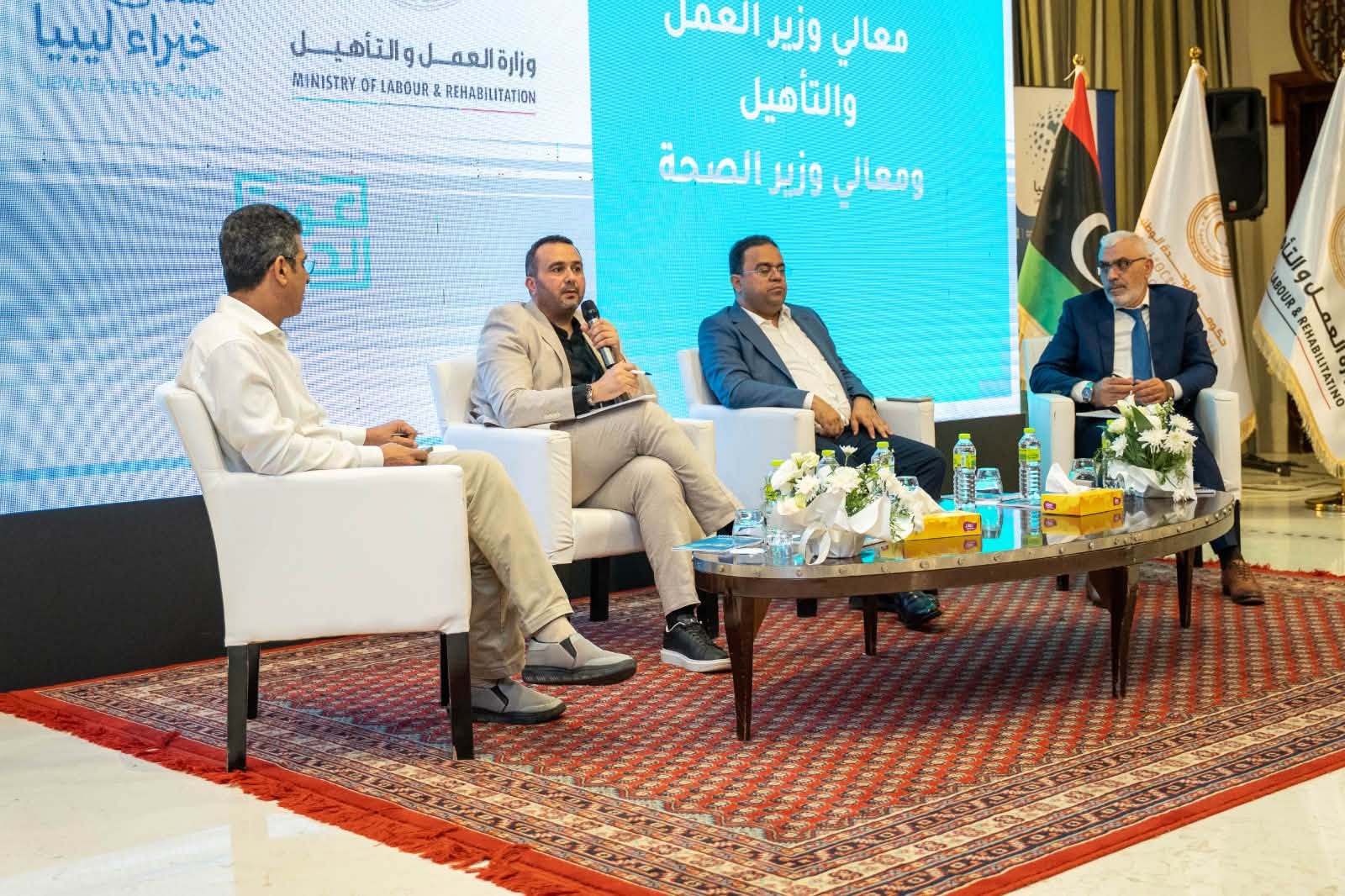
Tripoli, August 25, 2026 (LANA) – The second day of the Libya Experts Forum, held in the capital, Tripoli, from August 23 to 25, featured dialogue sessions addressing challenges in the health sector, chronic problems within the structure of the Libyan economy, as well as digital transformation and artificial intelligence.
The dialogue session on the health sector was attended by Minister of Labour and Rehabilitation in the Government of National Unity, Ali Al-Abed, Minister of Health, Mohammed Al-Ghoj, and Undersecretary of the Ministry Saad Al-Din Abdul-Wakil, along with a number of experts, specialists, and participants interested in medical and health affairs.
The session addressed a number of important files and issues related to the current state of the health sector in Libya and ways to develop it and improve the level of healthcare services. It also examined the main challenges facing the sector, the conditions of medical and allied health personnel, and ways to benefit from national expertise and competencies in supporting the development process.
The session featured extensive discussions between the two ministers and the experts, during which a number of practical proposals and solutions to existing challenges were presented, along with initiatives and ideas that could contribute to developing the health sector and enhancing its ability to respond to future needs.
The interventions emphasized the importance of unifying efforts and benefiting from the expertise of Libyan professionals both inside and outside the country, as well as creating broader spaces for dialogue and consultation among specialists and relevant authorities, in a manner that contributes to developing practical and implementable visions for advancing the health sector in Libya.
The second day of the forum also featured a dialogue session entitled “The Economic Dimension: Chronic Problems in the Structure of the Libyan Economy,” with the participation of a number of experts and specialists in the economic field, in addition to officials from the Ministry of Economy and Trade and representatives of the ministry and relevant government entities.
The session addressed the main challenges and chronic problems facing the structure of the Libyan economy and their impact on development and economic stability, while also examining a number of visions and proposals aimed at addressing structural imbalances, diversifying sources of income, and enhancing the efficiency of the national economy.
As part of the activities of the first Libya Experts Forum, a dialogue session was held on digital transformation and artificial intelligence, with the participation of Minister of Labour and Rehabilitation Ali Al-Abed and Minister of State for Digital Economy and Artificial Intelligence Affairs Ziad Al-Hajjaji.
The session addressed a number of important topics, including the national internet network and the possibility of turning it into a practical reality, as well as the future of robotics and artificial intelligence and the opportunities, challenges, and prospects for applying these technologies in Libya.
The session also discussed the role of artificial intelligence as a driver of development, its importance in accelerating the national transformation process, and its contribution to supporting institutions in developing their services and improving the efficiency of their performance.
These discussions come as part of the forum's approach toward opening specialized discussions that draw on the expertise of Libyan professionals and link knowledge with practical application across various sectors, according to the Ministry of Labour and Rehabilitation.