

Tetteh: Formation of Election Commission Board Faced Deadlock from the House of Representatives and State Council
Pulbished on: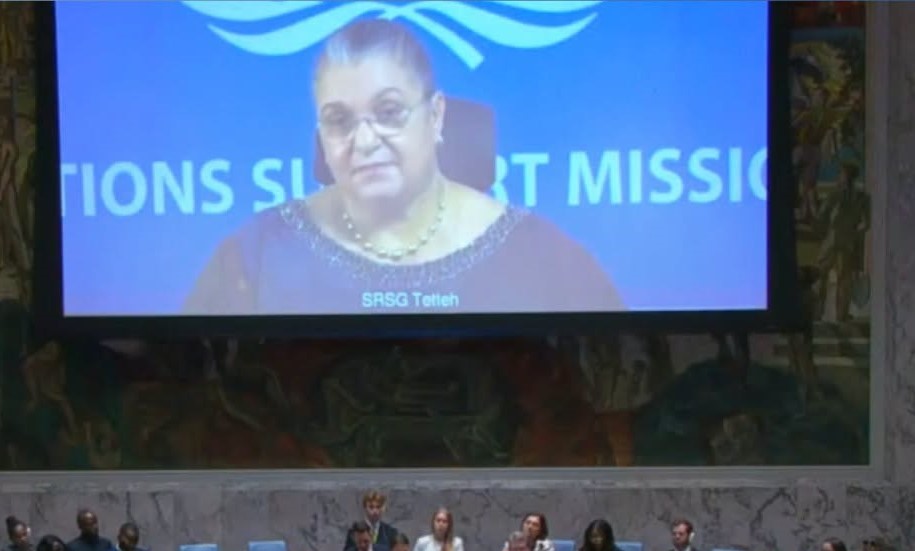
New York, August 18, 2026 (LANA) – The Special Representative of the UN Secretary-General in Libya, Hanna Tetteh, stressed the need to advance the political process in the country, affirming that power outages amid the heatwave reflect the state of institutional division.
In her regular briefing on the situation in Libya before the UN Security Council today, Tuesday, Tetteh said that the UN mission had been compelled to establish a 4+4 mini-dialogue committee to overcome the deadlock in negotiations between the House of Representatives and the High Council of State. She noted that the committee had held seven meetings ahead of its eighth meeting, scheduled for next Thursday in Tunis.
She added that progress on reconstituting the Board of the Electoral Commission had faced a deadlock from both the House of Representatives and the High Council of State, while the UN mission had made progress in the structured dialogue track, which continued for six months. She said its outcomes provide a framework to guide the building of state institutions, noting that the recommendations of the structured dialogue had been submitted to the UN Security Council.
Tetteh pointed out that the political process is aimed at restoring the state’s ability to provide services to citizens, manage resources responsibly, and create an environment that enables the country to adapt to the various risks it faces. She affirmed that the roadmap is based on three pillars: holding genuine presidential and legislative elections; the structured dialogue; and unifying executive institutions and forming a unified government, alongside preparing the necessary conditions for holding elections.
The UN envoy continued: “We are entering a critical phase in advancing the unification of institutions and creating the conditions for elections. This requires political determination from the Libyan parties, as well as coordinated and sustained international support.” She affirmed that the roadmap will require more time than initially anticipated, adding that the mission will continue working with determination to implement it.
The Special Representative of the UN Secretary-General announced that the UN mission intends to amend the roadmap it launched a year ago, in consultation with the Libyan parties and international partners, if necessary.
Tetteh said the mission intends to consult with the relevant Libyan parties, members of the Security Council, and key international partners to amend the roadmap wherever necessary. She stressed that it remains committed to its objectives and will draw on the provisions of existing political agreements, relevant legal frameworks, and the outcomes of the structured dialogue.
Tetteh warned that vital infrastructure is coming under increasing pressure, which Libya cannot ignore given its impact on people across all three regions of the country. She noted that the political process goes beyond merely bridging political divisions, as it concerns restoring the state’s ability to meet the needs of its people, responsibly manage its resources under unified institutions, provide security, and build resilience against various social, environmental, and other risks facing the country.
The UN envoy affirmed that power outages resumed in June and have continued through August, resulting in water supplies being cut off for hundreds of thousands of Libyans, in addition to severe fuel shortages in a country with Africa’s largest oil reserves.
...(LANA)...