


The second training program for monitoring and implementing Agenda 2063 for Africa has commenced in Tripoli.
Pulbished on: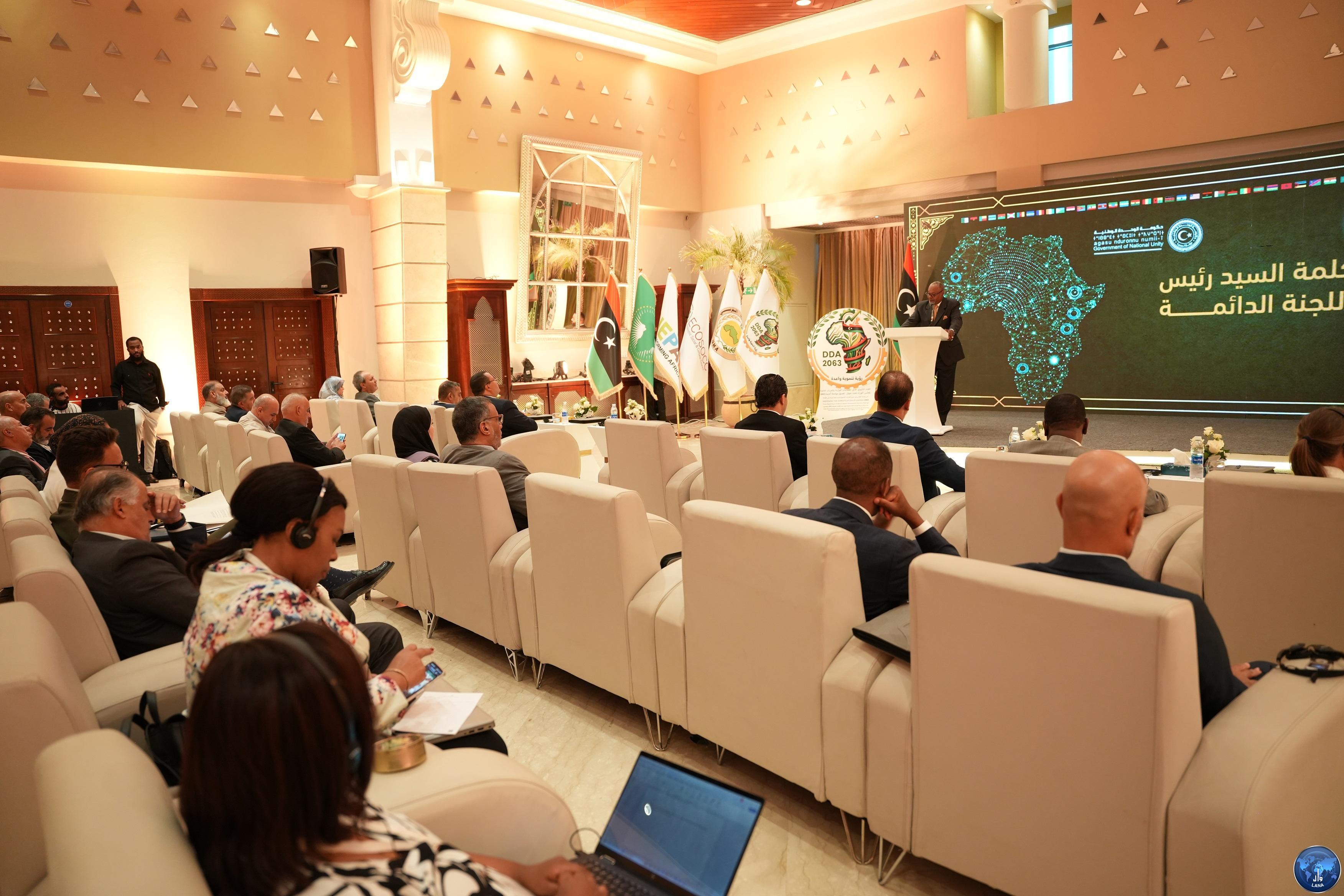
-Reporting by: Ismail Al-Kurbu
Tripoli, August 17, 2026 (LANA) – The second training program of the Standing Committee for Monitoring and Implementing Agenda 2063, entitled "Deepening Alignment with Agenda 2063: From Reporting to Evidence-Based Sustainable Development Decision-Making," commenced today in Tripoli.
The program also includes preparations for the 2026-2027 reporting cycle within the framework of the second ten-year implementation plan (2024-2033) of Agenda 2063.
The Chairman of the Standing Committee for Monitoring and Implementing Agenda 2063, Mohamed Al-Fadhel, affirmed that the program aims to strengthen the capacities of national institutions and bodies in aligning, implementing, and monitoring the second ten-year implementation plan, and to improve the quality of national reporting, thereby supporting evidence-based sustainable development decision-making.
Jibril explained that the program complements national efforts in implementing the second ten-year implementation plan for Agenda 2063, leveraging the findings of the adopted national report, and preparing for the 2026-2027 reporting cycle. He emphasized the importance of moving from the reporting phase to utilizing the results to develop procedures, plans, and follow-up mechanisms.
The program includes introductory and technical presentations, general discussions, working groups, sectoral applications, and practical exercises related to data, indicators, and the mechanisms for calculating, verifying, and documenting them. It also focuses on developing a matrix to align national and sectoral priorities and programs with the goals and priorities of Agenda 2063.
The program, which runs from August 17 to 20, aims to enhance national understanding of Agenda 2063, the second ten-year implementation plan, and the requirements for preparing progress reports. It also includes presenting the adopted national report, drawing lessons learned, identifying opportunities for improvement, and translating these into practical actions for future reports.
The work also includes preparing and adopting a roadmap to enhance Libya's reporting readiness, defining responsibilities, timelines, and technical support needs, as well as strengthening data governance, digital sovereignty, quality assurance, and interoperability between national systems and continental platforms.
Participants in the program include representatives from the Cabinet Office, the Standing Committee for Monitoring and Implementing Agenda 2063, several ministries and sectoral and oversight bodies, academic and research institutions, civil society organizations, media outlets, the private sector, youth and women's organizations, and the African Union's Technical Working Group on Agenda 2063.
The program is expected to produce several deliverables, including the development of a work plan for the next report, identifying responsible parties, timelines, and data sources; improving metadata for indicators; and formulating recommendations to strengthen data governance, quality assurance, and digital sovereignty. It will also develop a roadmap for Libya's readiness for the 2026-2027 reporting cycle.
Following the program's conclusion, the Standing Committee will oversee the implementation of the roadmap and adopted procedures in coordination with national entities and the African Union's technical team. This will enhance the sustainability of institutional coordination and align national and sectoral planning with the goals of Agenda 2063.
...(LANA)...