


Takala and Issa discuss economic reforms and preserving the independence of the Central Bank of Libya
Pulbished on: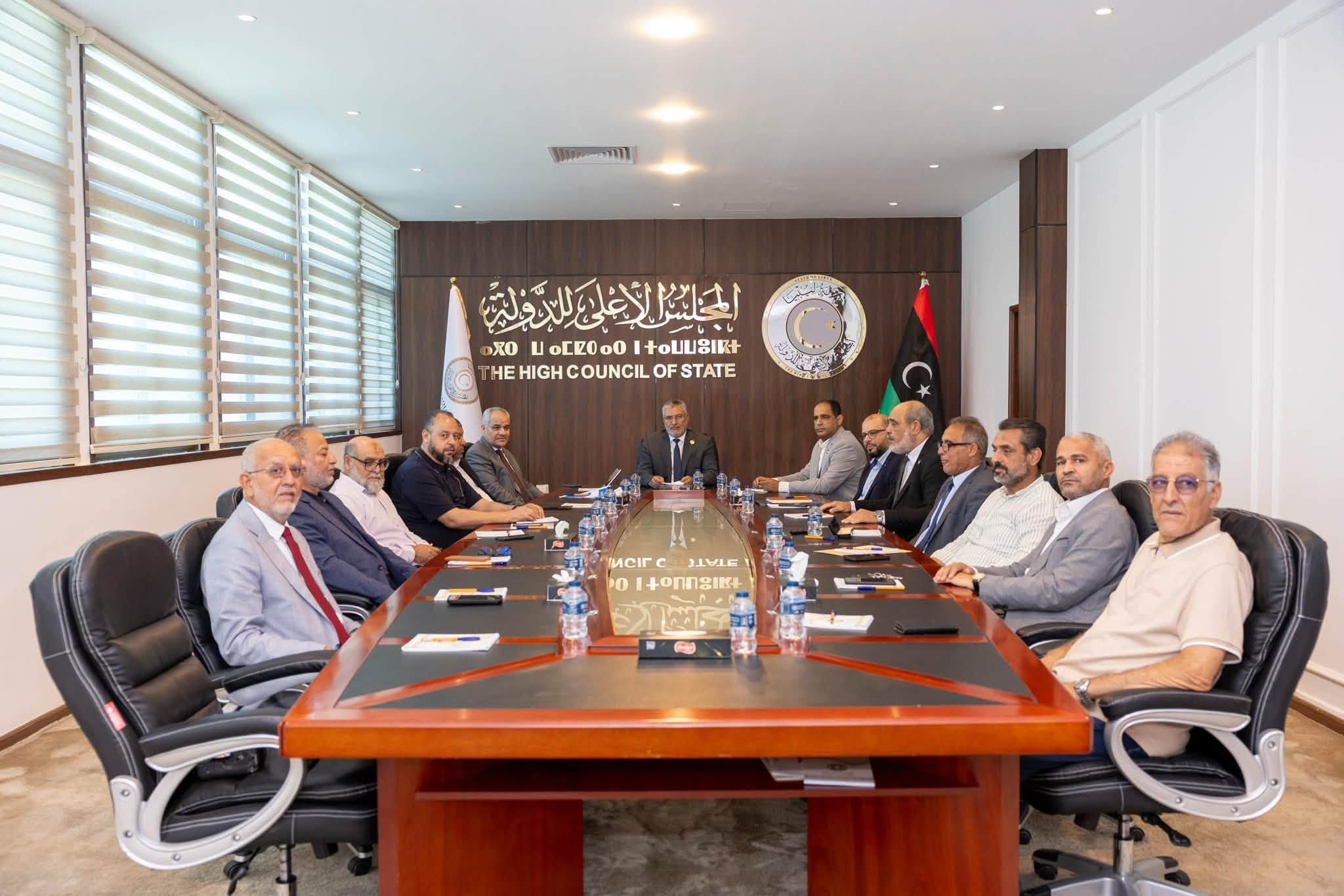
Tripoli, August 12, 2026 (LANA) – The President of the High Council of State, Mohamed Takala, met today, Wednesday, with the Governor of the Central Bank of Libya, Naji Issa, to discuss a number of financial, monetary, and economic issues. The meeting took place at the Council's headquarters in Tripoli, and was attended by First Deputy Naji Mukhtar, Second Deputy Omar Boushah, Council Rapporteur Belqasim Dabrez, and the heads of the Council's standing committees.
At the beginning of the meeting, Council members affirmed their rejection of the Central Bank Governor's resignation and their insistence on his continued service.
During the meeting, Issa reviewed the most prominent financial and monetary indicators and challenges, as well as issues related to public resource management, spending, liquidity, and the exchange rate, and the impact of these factors on economic stability and the living conditions of citizens.
The attendees stressed the necessity of ensuring the continued smooth operation of the Central Bank of Libya and preserving its professional and institutional independence, free from any interference or pressures that could affect the stability of monetary policy.
They also emphasized the importance of harmonizing fiscal and economic policies, rationalizing public spending, closing loopholes for waste and corruption, protecting public funds and state resources, and promoting the principles of transparency and accountability without exception.
In the same vein, the attendees stressed the importance of forming a joint technical committee between the State Council and the House of Representatives, in coordination with the Central Bank of Libya and relevant entities, to develop a comprehensive package of economic and financial reforms and monitor their implementation. This would contribute to addressing existing imbalances based on scientific and institutional foundations.
At the conclusion of the meeting, both parties agreed that overcoming the economic crisis requires taking responsible and courageous decisions, supporting competent individuals and institutions undertaking reform tasks, and prioritizing the national interest over partisan interests. This will preserve Libya's resources, enhance stability, and bolster confidence in the Libyan economy at both the domestic and international levels.
...(LANA)...