


A report by (LANA): Drinking water in Libya under scrutiny... What does the official survey say about (E. coli)?
Pulbished on: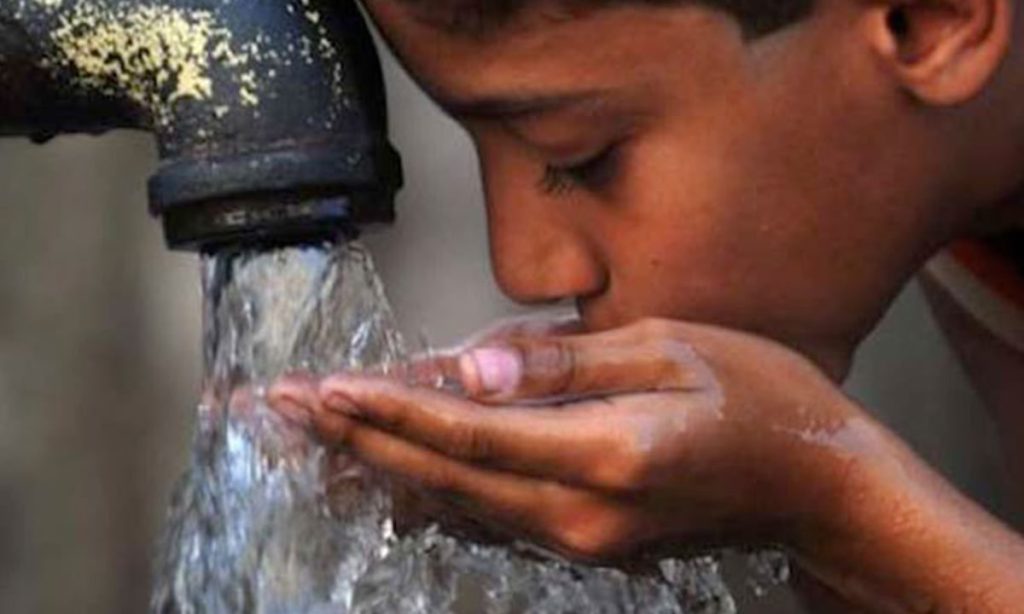
Tripoli, August 9, 2026 (LANA) – Reports of E. coli bacteria in a significant percentage of Libya's drinking water have sparked concern and inquiries, particularly after the Libyan Statistics and Census Authority, in cooperation with UNICEF, published the comprehensive national report on the results of the Multiple Indicator Cluster Survey (MICS) in Libya 2024–2025. The report has been widely circulated by various media outlets and news platforms.
The Authority stated that the report, published on August 6, serves as a comprehensive national reference documenting key statistical indicators related to the conditions of the population and families in Libya. It provides policymakers, researchers, and other stakeholders with an up-to-date database that supports evidence-based planning.
Because drinking water figures directly impact the health of every family, interpreting the report's data on water contamination requires a high degree of accuracy, avoiding both exaggeration and minimizing the seriousness of the findings.
The report includes a detailed analysis of a wide range of indicators in the areas of health, education, nutrition and child protection, water and sanitation, and other priority sectors. This provides a comprehensive picture of the development situation in Libya and contributes to monitoring progress towards achieving the Sustainable Development Goals.
The local affairs editor of the Libyan News Agency (LANA), who reviewed the section on drinking water, stated that the first conclusion that can be confirmed is that the survey is official and genuine, and the results regarding water quality are not mere rumors. This is especially true given that the survey included a nationally representative sample of 17,880 households, with a 99 percent response rate, and covered all Libyan administrative regions.
However, the editor believes the problem arises when one of the survey indicators is summarized as stating that "46.4 percent" of drinking water in Libya is contaminated with E. coli bacteria. He explained that this wording is inaccurate, as the indicator pertains to testing drinking water at the point of use for the households included in the survey, not testing 46.4 percent of Libya's water network or all water sources in the country.
He added that this detail is very important. The presence of E. coli bacteria in a sample of drinking water taken at home does not automatically mean that the contamination originated from the water treatment plant or the original source. There may be other links in the chain of transmission, such as the water network, household tanks, cisterns, storage containers, or the way the water is handled.
Scientific studies indicate that the presence of E. coli bacteria in drinking water is an indicator of recent fecal contamination, whether from human or animal sources, and is therefore used as a key indicator for assessing water safety. This bacteria can reach water sources through sewage leaks, agricultural runoff, flooding, or contamination of unprotected wells and reservoirs.
The risk of contamination increases in wells and springs near drainage sources and farms, as well as in open water bodies that are not regularly treated and disinfected. If water contamination is suspected, it is recommended to boil it for at least one minute before using it for drinking, cooking, or brushing teeth. Water purification methods should also be used, and regular laboratory tests should be conducted to ensure its safety.
According to experts, symptoms of infection after consuming contaminated water appear within several days. These symptoms include diarrhea, abdominal pain, nausea, vomiting, and dehydration, with children and the elderly experiencing a higher risk of complications.
The risk of contamination can be reduced by using appropriate purification and sterilization systems, such as reverse osmosis, ultraviolet (UV) irradiation, and ultrafiltration, along with regular maintenance of these systems.
The editor notes that the survey results, which indicate that only 38 percent of the population has access to a drinking water service classified as "safely managed"—a category that does not simply mean having an improved water source but requires water availability when needed, accessibility, and freedom from fecal contamination according to the survey's index—reveal that Libya's water problem is not merely one of availability or access, but also one of service quality and safety.
He added that the presence of E. coli bacteria necessitates serious attention, but the result does not mean that everyone who drinks this water will become ill, nor does it mean that every positive sample necessarily contains a harmful type of bacteria. Rather, it means that the water requires further testing, monitoring, and handling according to safety standards.
The editor noted high percentages in some areas and low percentages in others in the report, emphasizing that geographical variations in survey results are possible and significant, especially since the survey was designed to highlight differences between urban and rural areas. However, he stressed the importance of specifying the name of the indicator, the table, and the sampling point to which each figure belongs when reporting it, as the survey distinguishes between water at the source and water at the point of use, and the two indicators should not be confused.
He continued, stating that the basic information reported by some media outlets is correct, but it was phrased in a way that could mislead the reader. He explained that the report needs to link each local percentage to its corresponding table and indicator in the original document.
He added that the presence of bacteria in a bottled water sample taken at the point of use is not sufficient to prove that contamination occurred at the bottling plant. Water can become contaminated at later stages, during transport, storage, or when the bottle is opened and handled at home. Therefore, judging the safety of bottled water companies requires samples taken directly from the product before distribution, then comparing them with samples from points of sale and use.
The editor felt there was no need to panic, but stressed the importance of exercising extreme caution. Experts recommend ensuring household water tanks are clean and properly sealed, avoiding storing water in unclean containers, relying on trusted water sources, and conducting laboratory tests if there is any doubt about water quality, especially for families with children, the elderly, or those more susceptible to complications from intestinal diseases.
It is worth noting that thousands of families in Libya rely on water extracted from shallow and artesian wells in residential areas that were developed haphazardly outside of traditional urban planning schemes amidst the chaos that engulfed the country. In agricultural areas, water is extracted and stored in underground tanks before being transferred to rooftop tanks. Even in communities served by the Great Man-Made River, families have resorted to installing rooftop tanks due to the inadequate distribution network.
In concluding his remarks, the local affairs editor, noting the widespread concern and questions raised by the survey results—which revealed a serious gap in drinking water safety and highlighted the need for regular testing, identification of pollution sources, and their treatment—called upon the relevant Libyan authorities, particularly the Statistics and Census Authority and those concerned with the water and public health sectors, to promptly provide clear and transparent explanations regarding the nature of these results, the scope of the samples included in the survey, the locations and water sources tested, and whether the results reflect a general situation or are indicators specific to certain areas or sources. He further urged the holding of a conference or press conferences with specialists to explain the findings and address inquiries from citizens and the media, thereby limiting the spread of inaccurate information and preventing the exaggeration of fears.
In this context, he noted that the importance of this clarification is paramount given the recent announcements regarding the seizure and use of banned pesticides on some farms, and the resulting increased public concern about food and water safety. Therefore, clear and swift official communication is not merely a media exercise, but a necessity to protect public health and reassure citizens based on reliable scientific information, while simultaneously affirming the public's right to know the true extent of the risks and how to prevent them.
...(LANA)...