


The Ministry of Health and UNICEF launch the first phased training at the municipal level within the National Health Visitor Program
Pulbished on: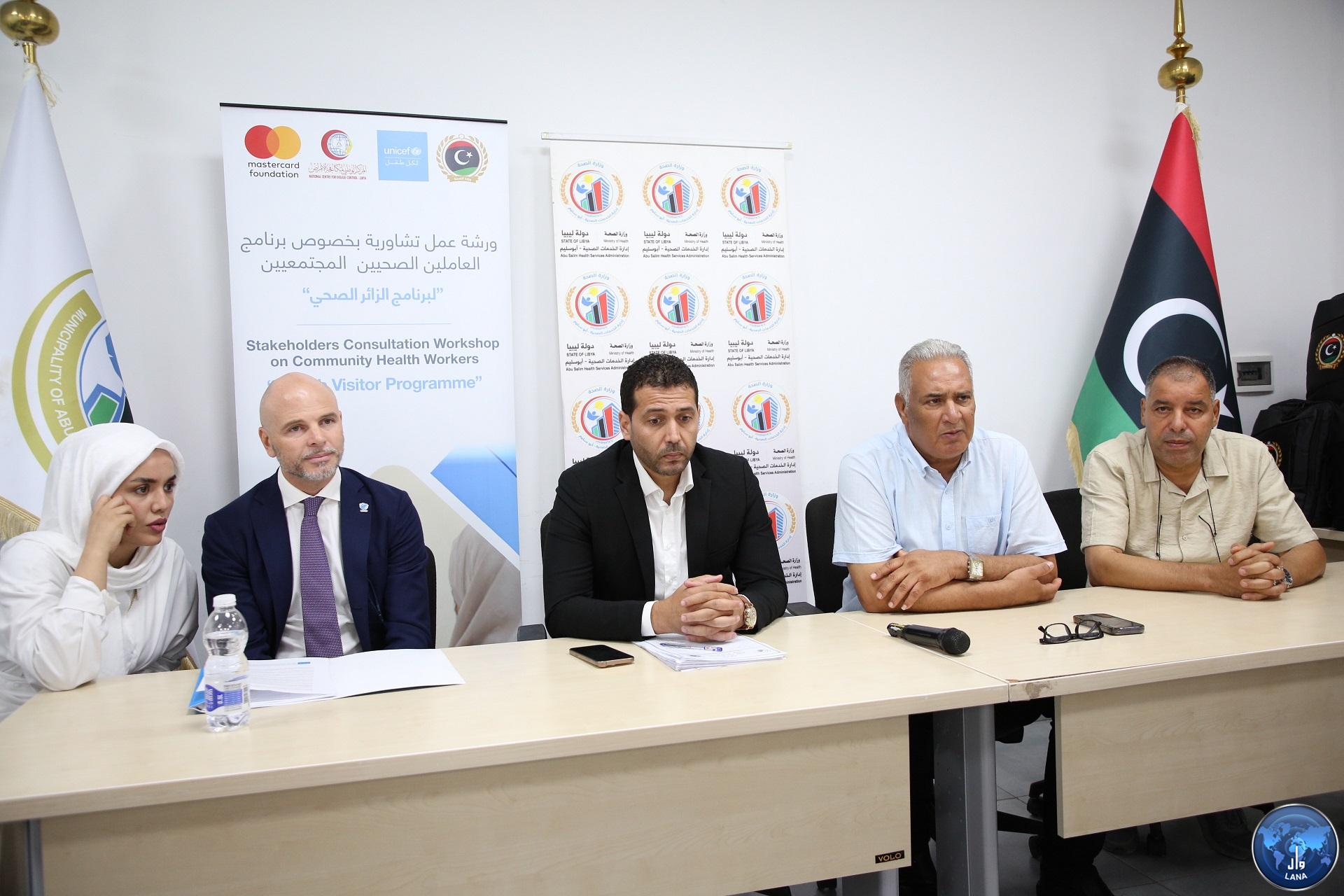
-Reported by: Ismail Al-Kurbu
-Photography by: Rajab Al-Abdi
Tripoli, August 3, 2026 (LANA) – The Ministry of Health of the Government of National Unity, in cooperation with the United Nations Children's Fund (UNICEF), launched the first phase of municipal-level training within the National Health Visitor Program on Monday in the Abu Salim Municipality. This step aims to strengthen community-based primary healthcare services and move the program to the field implementation phase at the municipal level.
The program's opening was attended by UNICEF Representative in Libya, Filippo Mazzari; WHO Representative, Dr. Mohamed Hashim; Mayor of Abu Salim, Mahmoud Attia; Director of Health Services in Abu Salim Municipality, Khaled Suleiman Al-Qallali; Director of the Medical Services Office and Supervisor of the Health Visitor Team in Abu Salim Municipality, Dr. Marwa Mohamed Idris; as well as members of the Abu Salim Municipal Council and the municipality's Health Visitor Team.
UNICEF Representative in Libya, Filippo Mazzarelli, affirmed that launching the first phased training at the municipal level represents a significant milestone in the implementation of the National Health Visitor Program, following the successful national training of trainers. He noted that the program aims to strengthen community-based primary healthcare and empower children and families to access health services near their homes.
He explained that the Abu Salim Municipality is setting a leading example by hosting the first phased training at the municipal level, contributing to building a stronger community health system. He emphasized UNICEF's continued support for the Ministry of Health and its partners until the program is rolled out across Libya.
For his part, the Mayor of Abu Salim, Mahmoud Attia, confirmed that the municipality receives direct support from the Ministry of Health to develop health services within health centers and hospitals. He pointed out that the primary goal is to serve citizens and ensure their access to the best possible health services.
The Mayor added that the Municipal Council will continue to support medical personnel in a way that serves the public interest and works to deliver health services to all residents of the municipality. He also stressed the importance of strengthening cooperation and building bridges of communication with UNICEF and the Health Services Administration to improve the level of healthcare provided to citizens.
In a statement to the Libyan News Agency, Dr. Marwa Mohamed Idris, Director of the Medical Services Office and Supervisor of the Health Visitor Team in Abu Salim Municipality, explained that the launch of the first phase of training embodies the principle of decentralization in healthcare services. This is achieved by bringing services closer to citizens and ensuring more equitable and comprehensive health coverage across municipalities.
She added that the program reinforces the concept of prevention and early detection of health problems within the community, rather than relying solely on treatment within healthcare facilities. It also contributes to building trust with families by training healthcare professionals from within the municipalities themselves. This enhances the effectiveness of health awareness campaigns and reduces pressure on hospitals and health centers.
She pointed out that the health visitor serves as a link between the healthcare system and families. Their duties include monitoring maternal and child health, raising awareness about vaccinations, promoting health education, assessing home safety, and identifying cases requiring referral to specialized healthcare facilities.
She explained that the first phase of the program in Abu Salim Municipality includes 24 trainees who are receiving training in communication skills, field health assessment, home visit management, health education, and emergency response. She noted that the selection of health visitors is based on criteria including qualifications in nursing, midwifery, public health, or allied health sciences, residency within the municipality, ability to work in the field, and adherence to professional ethics.
She added that the program employs a field and digital supervision system to ensure quality performance through direct monitoring, electronic documentation of visits, performance indicator measurement, and the implementation of periodic training programs to develop the health visitors' skills.
This training is part of the National Health Visitor Program launched by the Ministry of Health in cooperation with UNICEF in June 2026. The program aims to train 3,500 health visitors across Libya by 2028, thereby strengthening prevention services, health education, early detection, and referral to primary healthcare services, particularly for mothers, children, newborns, and the most vulnerable groups.
...(LANA)...