


(LANA - Special): A national agreement to revive stalled housing projects and address the housing crisis.
Pulbished on: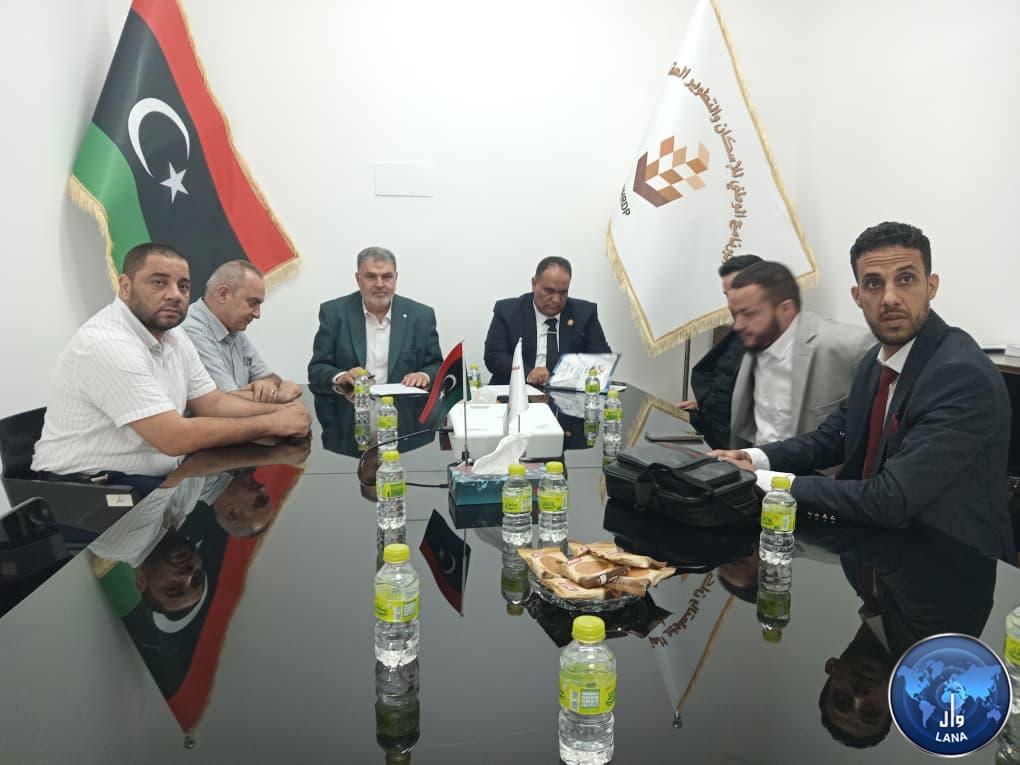
Follow-up and photography: Mohammed Al-Zarqani.
Tripoli, August 2, 2026 (LANA) - Since 2011, the housing sector in Libya has witnessed a state of suspension and disruption affecting most housing projects across the country, as a result of the security, economic, and administrative conditions that accompanied that period.
This suspension led to a widening housing gap and an accumulation of demand for housing units, at a time when thousands of citizens—particularly youth and low-income families—faced increasing difficulties in securing appropriate housing. It also resulted in economic and social consequences, including the paralysis of investments worth billions of dinars, a rise in real estate and rental prices, and the halt of numerous contracting companies and activities related to the construction sector.
As part of efforts to revitalize the housing sector and complete stalled projects, the National Program for Housing and Real Estate Development signed a cooperation agreement on Sunday in Tripoli with the General Union of Cooperative Housing Associations in Libya. The agreement aims to enhance partnership in implementing the national housing project, activate the role of cooperative associations in receiving and organizing citizens' applications, and manage the procedures for allocating and distributing housing units according to approved regulations and mechanisms.
The Director-General of the National Program for Housing and Real Estate Development, Faisal bin Dardaf, stated that the agreement falls within the program's efforts to address the housing gap and leverage the geographical spread of cooperative associations in various cities and municipalities. This supports the implementation of housing initiatives directed at various segments of society, foremost among them social housing programs.
It is worth noting that the National Program for Housing and Real Estate Development enjoys a legal personality and an independent financial budget, with its headquarters located in the capital, Tripoli.
The program aims to address the housing crisis, complete stalled housing projects, and attract investment in the real estate development sector to help provide suitable housing for citizens and achieve urban development.
Bin Dardaf added in a statement to the Libyan News Agency (LANA) that the agreement represents the beginning of institutional coordination between the program and the union. This enhances the role of cooperative housing associations as a key partner in implementing the national housing project and contributing to practical and sustainable solutions to the housing crisis in Libya.
The agreement provides for cooperation between the two sides in implementing programs and initiatives related to housing, alongside coordination with the Central Bank of Libya and commercial banks to provide housing finance programs. This will support the implementation of the national project and facilitate citizens' access to housing.
For his part, the Chairman of the Board of Directors of the General Union of Cooperative Housing Associations, Salem Belqasim Ibrahim, emphasized that signing the agreement represents an important step toward activating the role of cooperative associations in executing housing projects by receiving citizens' applications, organizing them, and participating in the allocation procedures of housing units to ensure they reach those eligible according to approved mechanisms.
He pointed out that the national housing project aims to complete 150,000 housing units across all regions of Libya, achieving fair distribution and ensuring that housing units reach those who deserve them nationwide.
The General Union of Cooperative Housing Associations in Libya, headquartered in the city of Benghazi, serves as an organizational umbrella uniting cooperative housing associations across the country. It aims to coordinate their efforts and represent them before official authorities, contributing to the support of the cooperative housing sector and expanding its role in providing housing for citizens.
Ibrahim explained that the agreement targets serving various eligible groups, foremost among them newlyweds, widows, divorced women, and other citizens facing difficulties in obtaining housing. He stressed that the success of the project is linked to providing the necessary financing, which requires the cooperation of the Central Bank of Libya and commercial banks to launch housing finance programs that enable citizens to benefit from the housing units.
Both sides affirmed that cooperative housing associations will play a pivotal role in receiving citizens' applications, managing allocation procedures, and participating in the distribution of housing units. This will enhance implementation efficiency and achieve the objectives of the national project in providing decent housing for Libyan citizens.
The signing of the agreement comes within the framework of efforts aimed at unifying the efforts of institutions concerned with the housing sector and strengthening institutional partnership to implement sustainable housing projects that help reduce the housing crisis and meet the needs of citizens nationwide.
Observers believe that the success of these steps will depend on the prompt provision of necessary funding, the completion of regulatory frameworks, and the concerted efforts of all relevant institutions. This will ensure the relaunch and completion of stalled projects according to clear timelines, potentially marking the beginning of a new phase to address the housing crisis in Libya, narrow the accumulated housing gap, and provide suitable housing for citizens in all cities and regions.
...(LANA)...