


Al-Koni concludes his visit to Geneva at the invitation of the University of Geneva and presents his vision for resolving the Libyan crisis.
Pulbished on: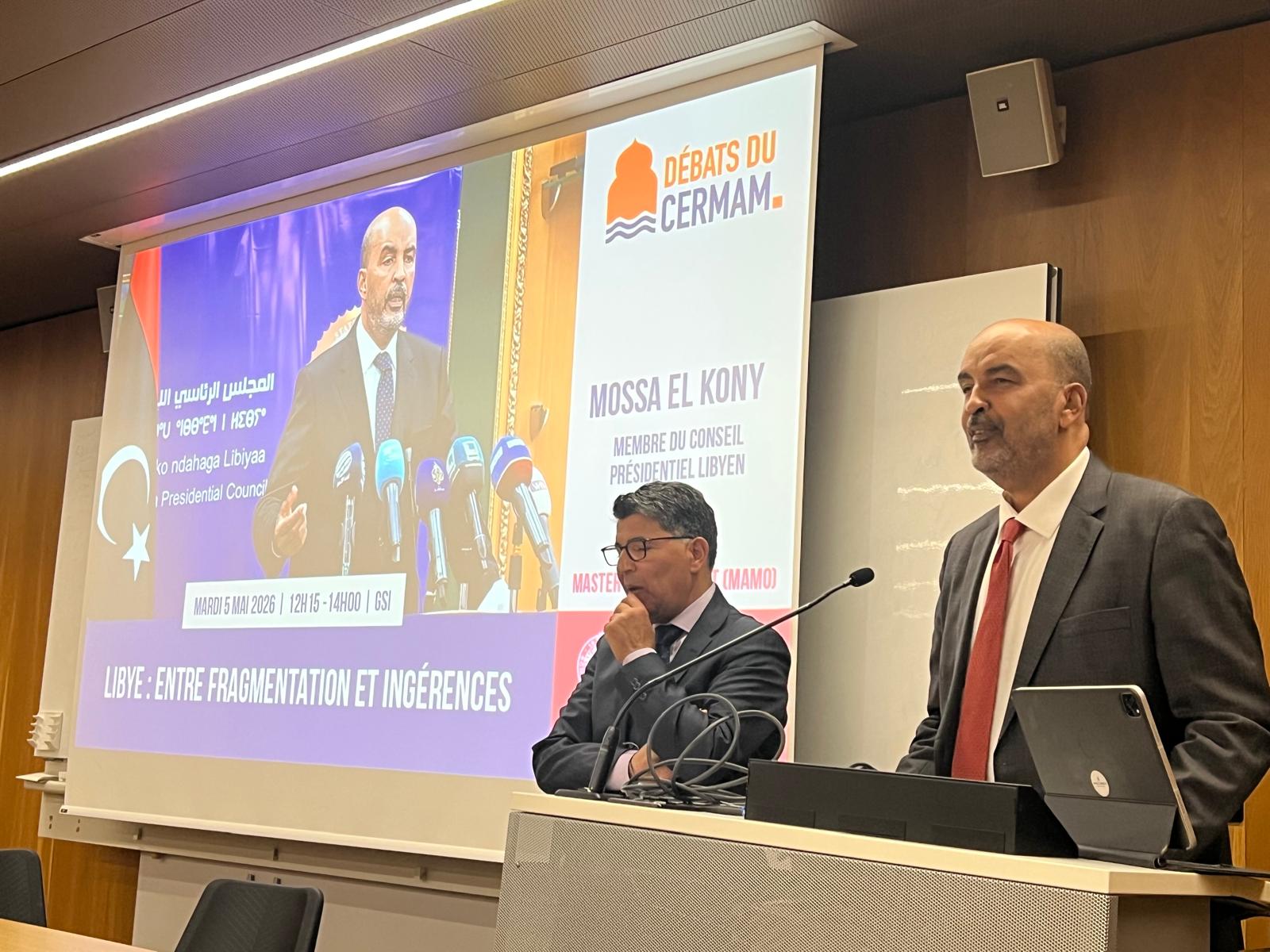
Geneva, May 7, 2026 (LANA) – Presidential Council member Musa al-Koni concluded a working visit to Switzerland on Thursday at the invitation of the University of Geneva. During his visit, he participated in academic sessions and intellectual dialogues addressing developments in the Libyan crisis and the future of stability in Libya and the Sahel region. He emphasized that adopting a regional system represents the most suitable solution to overcome the current political deadlock.
Al-Koni explained, during a brainstorming session organized by the university's Center for Studies and Research on the Arab and Mediterranean World, that a solution based on a regional system guarantees fair representation for the three historical regions, including Fezzan, through equal arrangements in power, budget, and government, leading to the formation of a national parliament and an elected presidential council whose members rotate power periodically.
The session, which brought together a select group of researchers and thinkers interested in Libyan and Sahel affairs, witnessed extensive discussions on the political and security issues facing the region, as well as political initiatives and economic and development projects related to prospects for stability in Libya.
Regarding the so-called “Paul’s Initiative,” Al-Koni affirmed that the US envoy to Libya, Massad Paul, clarified to him during a previous meeting in Washington, on the sidelines of the annual conference of the Libyan-American Council, that the United States does not intend to propose any project that contradicts the will of the Libyan people or imposes a specific formula for governing the country.
During the interview, Al-Koni emphasized that he adopted a high degree of transparency and candor in discussing the various issues related to the Libyan crisis, without exception or restrictions on the questions raised.
Al-Koni also chaired an academic session organized by the Institute of Global Studies at the University of Geneva as part of the “New Institutional and Political Dynamics in North Africa” program, entitled “Local Actors and External Influences,” with the participation of graduate students and researchers specializing in Libyan affairs.
The session witnessed broad interaction from students and researchers from several countries, with discussions addressing developments in Libya, relations between countries of the Global South and North, and the nature of possible solutions to the Libyan crisis and its regional and international repercussions.
Al-Koni concluded his program in Geneva with a meeting with the UN Special Rapporteur on Minority Issues, Nicolas Levrat, to discuss the repercussions of conflicts in the Sahel region and their historical and political causes, particularly regarding the marginalization of minorities and their rights.
During the meeting, Levrat emphasized the importance of addressing the historical roots of conflicts linked to colonial divisions in Africa, which led to the fragmentation of certain ethnic groups, including the Tuareg, within political boundaries that relegated them to a minority status.
The UN official stressed the need to strengthen the right to peace and stability as a foundation for guaranteeing minority rights, calling for drawing on the Libyan experience of coexistence among the various components of the Libyan people without exclusion.
...(LANA)...