


Libyan-Italian Relations Workshop
Pulbished on: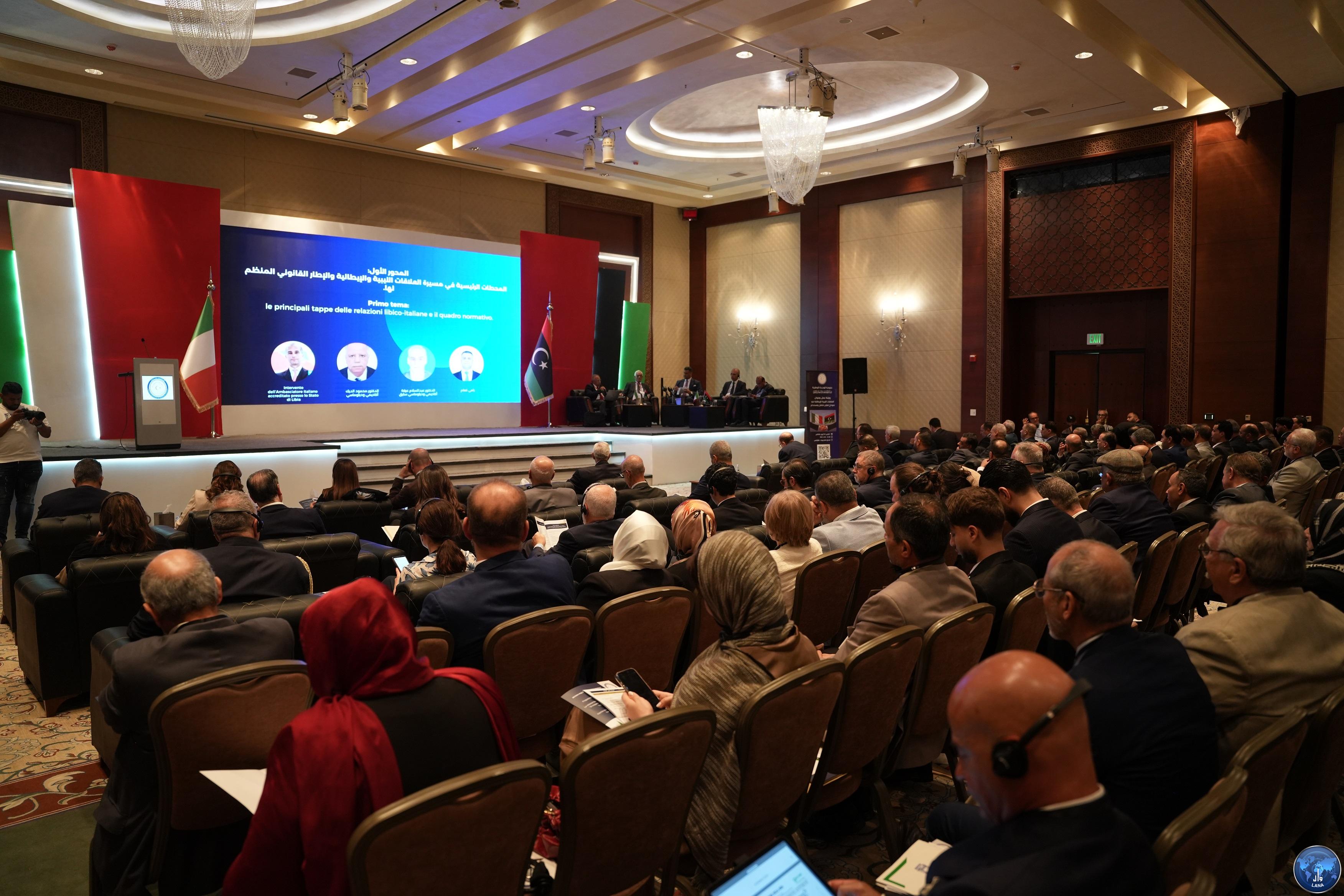
Reported by: Ismail Al-Kurbu
Photography by: Fathi Shalfait
Tripoli, April 27, 2026 (LANA) – A workshop held in Tripoli on Monday, titled “Libyan-Italian Relations: Towards a Comprehensive and Sustainable Model,” concluded with a set of recommendations aimed at developing bilateral cooperation and strengthening the partnership between Libya and Italy in various fields.
The workshop's final recommendations called on governmental and non-governmental institutions in both countries to conduct a thorough analysis and direct available efforts and resources towards capitalizing on the momentum and political consensus between the two governments. This presents promising opportunities that both sides should explore, cultivate, and develop to serve the common interests of the two friendly nations.
The recommendations also included activating the structures and frameworks of the Treaty of Friendship, Partnership, and Cooperation signed between the two countries. This can be achieved by expediting the reconstitution of its technical committees and the Follow-up and Partnership Committees, and by convening their joint meetings as stipulated in the treaty.
The recommendations emphasized the importance of activating mechanisms for ongoing political and security consultations between the two countries to exchange views and unify positions on issues and matters of common interest at the bilateral, regional, and international levels. They also stressed the need for a joint technical review of agreements and memoranda of understanding signed between the two sides, based on agreed-upon principles, to leverage them in strengthening existing relations according to the priorities and interests of both parties.
On the economic front, the recommendations emphasized increasing attention to joint investment, particularly in promising sectors, by creating a suitable environment and encouraging investors. This includes launching joint investment initiatives in areas such as renewable energy, fisheries, and industries based on raw materials that are abundant and have a comparative advantage in Libya, as well as transferring expertise, technology, and knowledge.
Furthermore, the recommendations called for inviting private sector institutions in both countries to launch an integrated digital platform to connect the business communities of both nations, prioritizing small and medium-sized enterprises (SMEs), and exploring available and feasible avenues for Libyan goods to access the Italian and European markets.
In the educational field, the recommendations emphasized the importance of increasing the number and scope of scholarships for Libyan students, particularly in the study of Italian language and culture, and at the undergraduate and postgraduate levels. They also stressed the need to establish intermediate and higher technical training centers in partnership with their Italian counterparts, as well as to strengthen academic and research collaboration between universities and research centers in both countries, directing this collaboration towards issues of importance and need in both nations.
Furthermore, the recommendations emphasized the need to increase attention to cultural, artistic, and intellectual exchange at the governmental and non-governmental levels in both countries. This could be achieved through organizing events and activities, especially at the municipal, youth, and women's levels, and by celebrating "Friendship Day" annually on August 30th.
The recommendations also called on Libyan and Italian institutions to work together and explore opportunities for joint investment in African markets. They urged leveraging the advantages, opportunities, and relationships that both countries enjoy within various regional and international organizations and groupings. Finally, they called for activating existing mechanisms for joint work between the Italian Agency for Development Cooperation and various Libyan entities through the Ministry of Foreign Affairs and International Cooperation, and supporting their programs and activities in accordance with development priorities and the needs of those entities.
...(LANA)...