


Guterres presents a report on the UN mission in Libya to the UN Security Council
Pulbished on: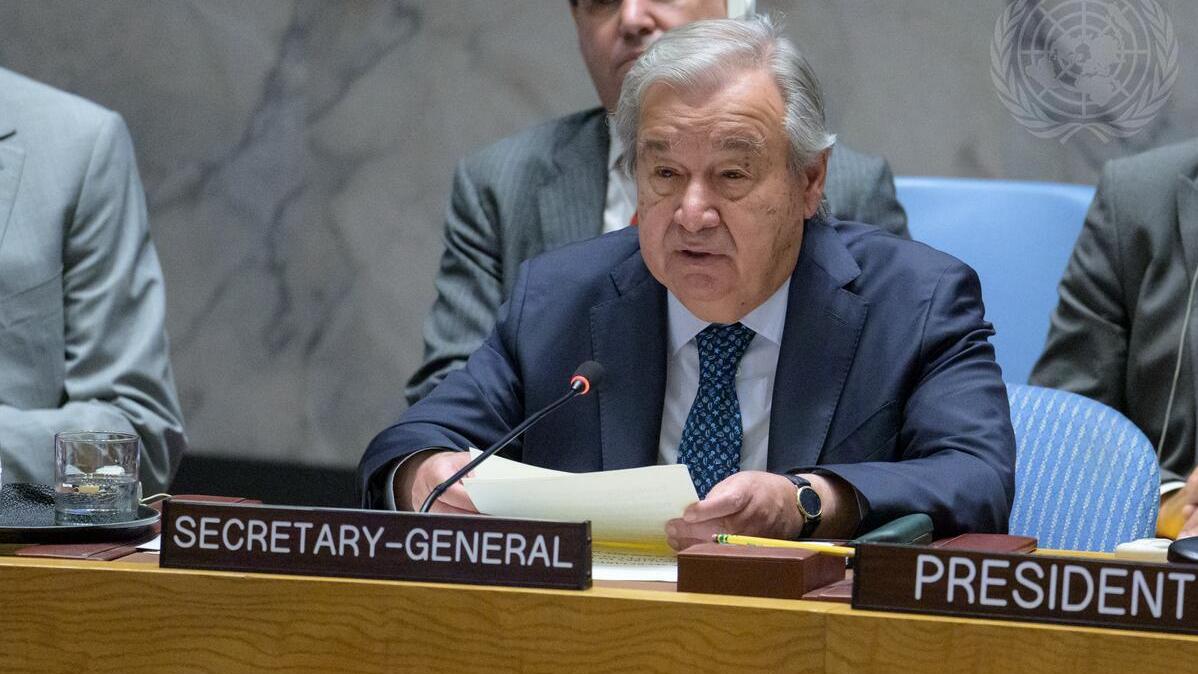
New York, April 16, 2026 (LANA) – UN Secretary-General António Guterres submitted a report to the Security Council on the United Nations Support Mission in Libya (UNSMIL), covering political, security, and economic developments in Libya from November 28, 2025, to March 31, 2026. The report also provided an overview of the humanitarian and human rights situation in the country, as well as UNSMIL’s activities during the same period, according to the mission’s official website.
Guterres emphasized the continued political, institutional, and security complexities in Libya, noting that the mission’s efforts had not achieved tangible progress between the House of Representatives and the High Council of State regarding the two key pillars of the political roadmap.
He explained that unilateral actions taken by both sides had deepened public distrust, threatened the unity of the High National Elections Commission, and delayed the development of a comprehensive electoral framework, thus undermining the credibility of the political process at a critical juncture.
This UN assessment reflects a tense political reality, as disagreements between the two councils continue to hinder the implementation of essential tasks, particularly those related to amending electoral laws and completing the formation of the High National Elections Commission, given the absence of any real breakthrough in reaching a consensus.
In an attempt to overcome this impasse, the Special Representative of the Secretary-General, Hanna Tetteh, proposed an alternative approach based on a two-step process, which Guterres deemed the most viable option, urging the Libyan parties to engage constructively without further delay.
In parallel, the Structured Dialogue Committee, comprising some 120 Libyan figures, continues its meetings in Tripoli. This round focuses on discussing the root causes of the conflict, particularly in the security and governance tracks, as well as addressing the constitutional impasse that is obstructing the organization of elections.
The committee is working on formulating practical and implementable recommendations to be included in the final report, as part of efforts to create the conditions for holding elections. The UN has emphasized that this process represents one of the main pillars of the political roadmap.
In a related context, the report noted the increasing international involvement in the Libyan issue, particularly from the United States, led by the US President's Advisor on Arab and African Affairs, Massad Boulos, who held a series of meetings between parties from the east and west of the country.
These efforts resulted in the signing of an agreement to unify public spending, a step described as the first financial consensus in over 13 years. This reflects a trend toward addressing the division through an economic track, bypassing direct political complexities.
However, this approach raises questions about the overlapping international roles, given the lack of a clear stance from the UN mission regarding these developments. This reinforces the impression that parallel tracks exist that may intersect or compete rather than complement each other.
Domestically, Guterres indicated that the continued holding of municipal council elections in a peaceful atmosphere represents a positive development, as these are the only local entities that have received a recent mandate from voters, thus granting them an important role in supporting local governance.
Observers believe this local track could form a gradual basis for rebuilding legitimacy, given the stalled national track, especially if it is built upon to broaden political participation from the grassroots to the top.
Economically, the report warned of the continued fragility of the Libyan economy due to institutional division and multiple, uncoordinated spending channels. This has exacerbated the deficit and increased dependence on oil revenues, in the absence of a unified fiscal policy.
While the agreement to unify spending represents a first step towards addressing these imbalances, its success remains contingent on the ability to translate it into effective implementation mechanisms, free from political interference.
Regarding the judiciary, Guterres warned that the politicization of judicial institutions and the growing divisions within them undermine one of the pillars of the state. He called for support for legal mediation efforts to preserve the independence and unity of the judiciary.
He also noted that transferring one of the suspects to the International Criminal Court represents a positive step towards achieving justice, at a time when accountability issues remain among the most significant challenges to stability.
On the issue of migration, the Secretary-General expressed grave concern about the situation of migrants and refugees, citing reports of unofficial detention centers and mass graves, as well as the escalating trafficking in persons, weapons, and drugs.
He called on the Libyan authorities to take urgent measures to dismantle these networks, close illegal detention centers, and strengthen international cooperation to improve protection mechanisms and ensure safe and dignified returns.
...(LANA)...