


Al-Sunni before the Security Council warned against parallel spending and called for its unification and rationalization.
Pulbished on: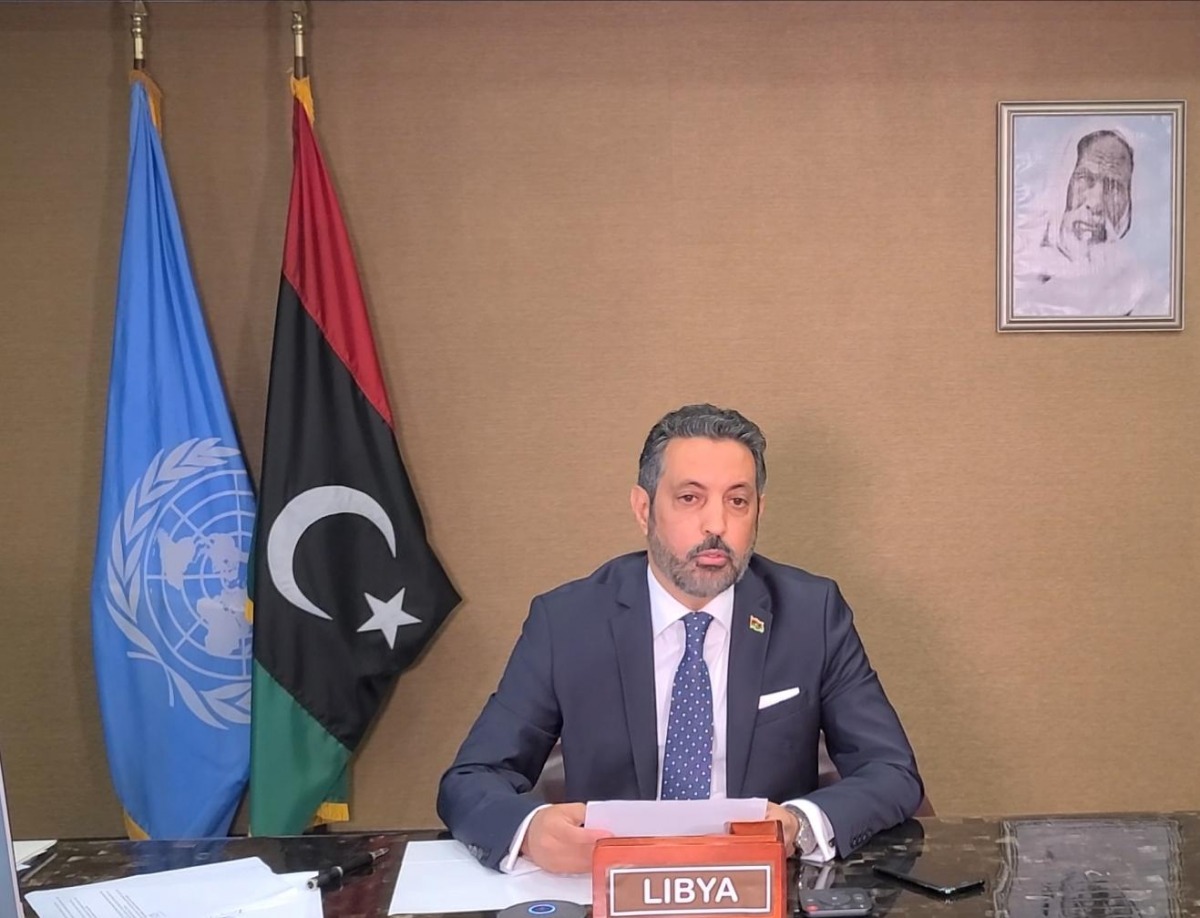
Tripoli, February 19, 2026 (LANA) – Libya’s Permanent Representative to the United Nations, Taher Al-Sunni, warned against the continuation of parallel spending outside approved frameworks, considering it one of the main reasons for the worsening exchange rate crisis, rising prices, and the erosion of citizens’ purchasing power.
This came in his address yesterday, Wednesday, before the Security Council, during its session dedicated to discussing the latest developments in Libya.
Al-Sunni pointed out that opening monthly lines of credit in the absence of a unified budget poses a threat to financial and monetary stability, calling for the unification and rationalization of spending, and support for the unified development agreement to control development expenditures.
He stressed that the future of Libya’s relationship with its international partners must be based on respect for national sovereignty and the strengthening of economic partnerships, free from negative interference.
In this context, he pointed to the successful convening of the "Libya Energy and Economy Summit" in Tripoli in late January, which witnessed broad participation from international companies and institutions and resulted in the signing of investment agreements in the oil and energy sectors estimated at approximately $20 billion, with expectations of net returns exceeding $370 billion in the medium and long term.
In concluding his remarks, Al-Sunni stressed that the core of the Libyan crisis lies in the political division, and that all economic, security, and humanitarian challenges, including issues of terrorism and migration, will only be addressed by ending this division and renewing legitimacy through a clear constitutional framework and general elections in which the Libyan people decide their own destiny.
He affirmed that Libyans do not lack the desire for peace or democracy, but rather need a political process with clearly defined outcomes, and international support that respects national sovereignty, ends all forms of foreign presence, and opens a new chapter of equitable partnership free from guardianship or dictates.
...(LANA)...