


Denmark, France, Greece, Latvia, Liberia, Panama, and the United Kingdom call on the Libyan parties to resume the political process.
Pulbished on: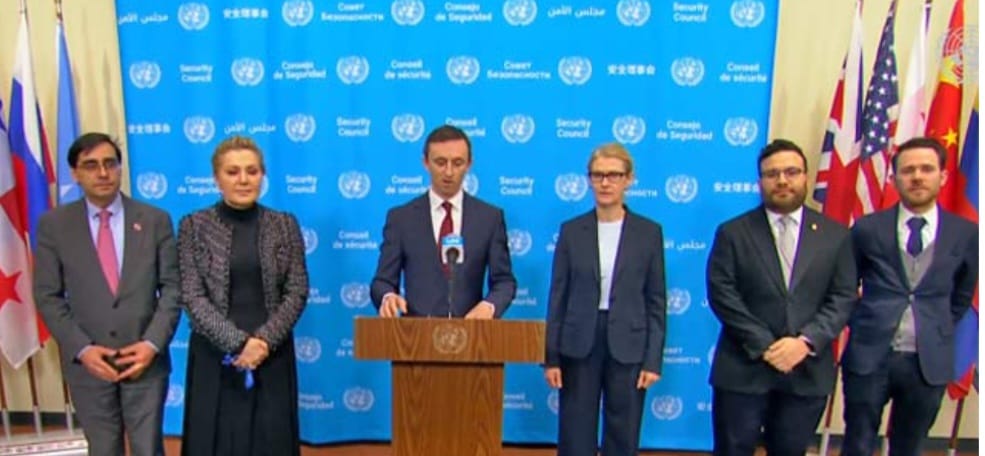
New York, February 19, 2026 (LANA) – Denmark, France, Greece, Latvia, Liberia, Panama, and the United Kingdom called on Libyan parties to resume the political process, integrate climate risks into national planning, and strengthen disaster management governance.
This came in a joint press statement issued Wednesday in New York, ahead of the UN Security Council session on Libya, and included messages addressed to the Libyan parties.
These countries, signatories to the joint pledges on climate, peace, and security at the Security Council, affirmed in the press statement that they renew their collective call to address the interconnected challenges facing Libya in the areas of climate change, peace, and security. They noted that the country is facing severe climate pressures that exacerbate its fragility, with water scarcity, rising temperatures, and flooding leading to deteriorating livelihoods, increased competition for resources, and increased displacement.
The statement noted that Libya is among the world’s most water-scarce countries, with less than 2% of its land arable and rainfall projected to decrease by 7% by 2050, which will exacerbate climate pressures in the future.
In their letters, the countries urged Libyan parties to resume a Libyan-led and Libyan-owned political process as soon as possible. They asserted that the current stalemate hinders the country’s ability to respond to climate shocks and increases the risk of armed groups exploiting divisions. They also called for integrating climate-related peace and security risk management into a unified national budget based on inclusive and gender-sensitive decision-making.
In their second letter, these countries emphasized the crucial role of civil society and local authorities in promoting climate action. They commended the UN mission’s support, particularly through the “Environmental Vision: Libya’s Youth Climate Challenge 2026” initiative, and stressed the need to support youth- and women-led initiatives, based on climate security assessments that consider the circumstances of border communities and areas vulnerable to displacement.
In its third letter, the group stressed that strengthening disaster risk governance and climate finance preparedness are priorities for preventing future crises, citing the 2023 Derna disaster as a prime example of the cost of inaction.
It welcomed the establishment of the National Center for Emergency and Crisis Management, calling for the development of a multi-hazard early warning system and the creation of a national climate risk register to guide reconstruction, land-use planning, and water management. It also urged international partners to support the establishment of a national climate finance task force.
...(LANA)...