


Dabaiba receives the Italian Interior Minister and reiterates Libya's refusal to become a permanent destination for migrants.
Pulbished on: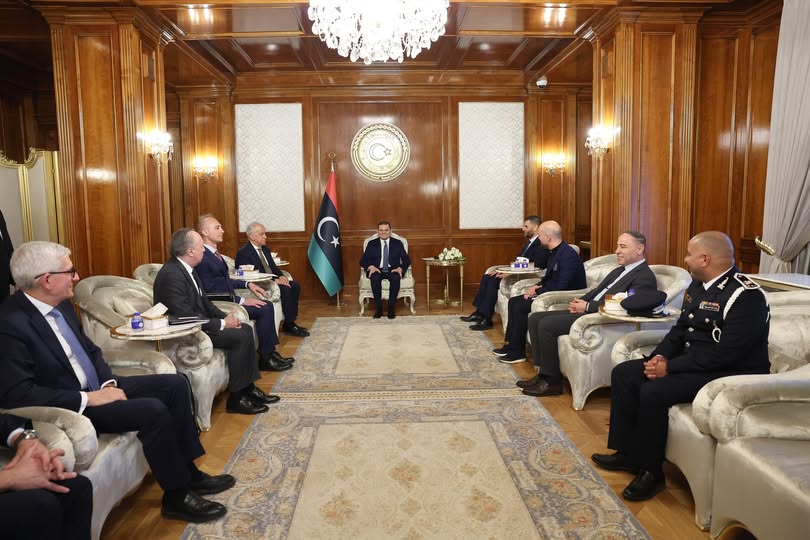
Tripoli, February 9, 2026 (LANA) – Prime Minister Abdulhamid Dabaiba of the Government of National Unity reiterated Libya's firm stance against allowing its territory to become a destination or permanent settlement for irregular migrants.
This came during his meeting on Monday with Italian Interior Minister Matteo Piantedosi, within the framework of strengthening bilateral cooperation between Libya and Italy and discussing mechanisms for developing the existing partnership in combating irregular migration, according to the Prime Minister's Media Office.
Dabaiba stressed that managing migration requires a collective commitment from countries of origin, transit, and destination, foremost among them Italy and the European Union, through the practical and direct implementation of their political, financial, and technical obligations.
The meeting addressed the outcomes of the first technical meeting of the Quartet Committee on Combating Irregular Migration, held on January 26. It was agreed to appoint permanent technical liaison officers within the joint operations room, who will oversee its equipment and technical and operational arrangements, ensuring its readiness for joint work and the regular exchange of information.
The two sides reviewed existing and proposed technical and logistical support programs to enhance the operational readiness of the Libyan Coast Guard. This includes bolstering interception and rescue capabilities, developing maritime surveillance systems, and strengthening maintenance and operational capacities, thereby contributing to increased operational efficiency and effective management of migration flows in the Mediterranean.
The meeting also addressed the voluntary return and resettlement process. The Prime Minister emphasized that developing voluntary return centers is a cornerstone of any balanced and sustainable approach to addressing irregular migration. He stressed the importance of the Italian and European role in supporting this process through funding, equipment, operation, and coordination with international partners.
...(LANA)...