


Report: The African Sahel between breaking hegemony and testing the state
Pulbished on: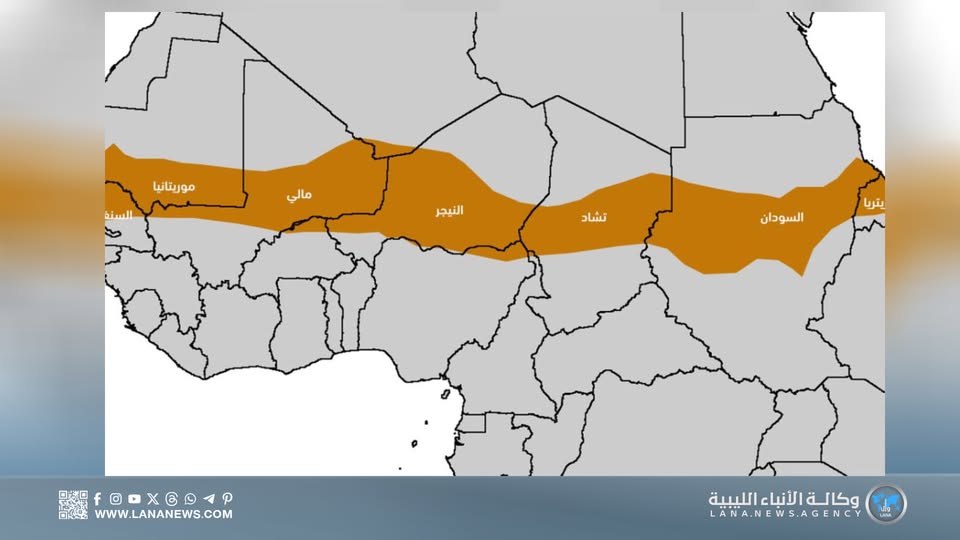
Benghazi, January 13, 2026 (LANA) – The Sahel region of Africa is witnessing rapid geopolitical transformations described by its new leaders as a “silent revolution” against the legacy of colonialism and Western influence. European capitals, particularly Paris, view these transformations as a direct challenge to a system that has been in place for decades.
At the heart of these transformations are Mali, Burkina Faso, and Niger, led by transitional presidents with military backgrounds: Assimi Goïta in Mali, Ibrahim Traoré in Burkina Faso, and Abdourahmane Tchiani in Niger.
In less than three years, these countries have succeeded in dismantling most of the instruments of traditional French influence, from military bases and security agreements to political and media discourse.
From Coups to a Regional Political Project
What began as a series of military coups (2020–2023) gradually evolved into a transnational political project, culminating in the declaration of the Alliance of Sahel States (AES) as a practical alternative to traditional regional frameworks such as the Economic Community of West African States (ECOWAS), which Sahel leaders now accuse of being a "tool of Western pressure."
Following these developments, it is clear that the new alliance is not limited to security cooperation, but also presents broader ambitions: joint defense coordination, a converging foreign policy, and a sovereign discourse rejecting Western tutelage.
The CFA Franc (CFA): Symbolism Before Economics
The announcement of the intention to abandon the CFA franc is the most symbolic dimension of this transformation. Historically linked to the French treasury and the euro, the currency has long been considered by African nationalist movements as a symbol of economic colonialism, a constraint on monetary policy, and a non-military tool of influence wielded by Paris.
Despite the absence of an official timeline for launching a unified currency for the Sahel countries, political discourse confirms that the project is underway, whether as a common currency or as a gradually independent monetary system. However, economic experts have warned of challenges to monetary stability, weak reserves, and the risks of inflation and financial isolation. The new leaders of the Sahel countries respond that "political independence is incomplete without monetary sovereignty."
- A Unified Passport? A Redrawing of the Mind Map
In a related context, talk of a unified passport for the Sahel countries reflects an ambition that extends beyond economics to redefining political identity in a region whose borders were drawn by colonial powers. This project, if realized, could enhance freedom of movement, create a new internal market, and reduce reliance on European frameworks for migration. However, observers believe it may clash with a fragile reality characterized by security crises, weak administrative structures, and challenges to international recognition posed by France, its partners in the European Union, and perhaps the United States.
France and Europe: From Influence to Concern
For France, these developments represent its greatest strategic setback in Africa since the 1960s and the winds of independence shaped by colonial powers to serve their interests, despite their military withdrawal under pressure from national movements and international shifts. Indeed, Paris has lost its military presence in Mali and Niger, its traditional political influence, and its ability to directly influence the decisions of these three capitals. The European Union, for its part, views with concern the potential expansion of Russian and Chinese influence, the unraveling of security partnerships, and the possible repercussions on migration and energy. Despite the cautious European rhetoric, Western research centers are discussing the failure of the Western intervention model in the Sahel, particularly after a decade of military operations without any real stability.
The International Dimension: A Multipolar World on the Sahel's Doorstep
Observers believe that the actions of the Sahel countries intersect with broader transformations, including the decline of traditional Western hegemony, the rise of alternative powers (Russia, China, Turkey, Brazil, India), and the growing discourse of sovereignty in the Global South. The three capitals are thus attempting to capitalize on this shift through new security partnerships and diversified economic relations, all under the guise of an anti-neo-colonial discourse that resonates widely with the public. This discourse is fueled by widespread unemployment and poverty, forcing young people to embark on perilous journeys of illegal migration, risking death in the desert or at sea aboard flimsy boats. Meanwhile, the plundering of rare minerals and natural resources abundant in Africa continues, perpetrated by Western and American monopolies, as well as Chinese and Russian companies.
However, the sovereignty discourse of the Sahel countries faces internal challenges no less serious than external pressures. These include the fragility of state institutions, rampant corruption, and ethnic and regional divisions—structural factors that could hinder the transformation of political aspirations into sustainable reality if not addressed through profound reforms.
Alongside the opening up to new international partners like Russia and China, and despite their differing approaches from the traditional Western model, the logic of self-interest remains present, including the exploitation of resources, albeit through more subtle means. This necessitates that the Sahel countries manage these partnerships cautiously, lest disengagement from the old hegemony transform into a different kind of dependency.
- Between Revolution and Test
What is happening in the Sahel is not an immediate end to French influence, nor the certain birth of a fully integrated alternative system. Rather, it is a high-stakes transitional phase, the success of which hinges on translating the discourse of sovereignty into effective institutions, improving living conditions, and managing international relations without the isolation that Western powers, particularly France, are striving for. Failure, on the other hand, could deepen the crises instead of resolving them. What is certain, however, is that the African Sahel is no longer a silent arena, but a player seeking, for the first time in decades, to redefine its position within the international system.