


The Speaker of the House of Representatives accuses the head of the High Council of State of obstructing the electoral process.
Pulbished on: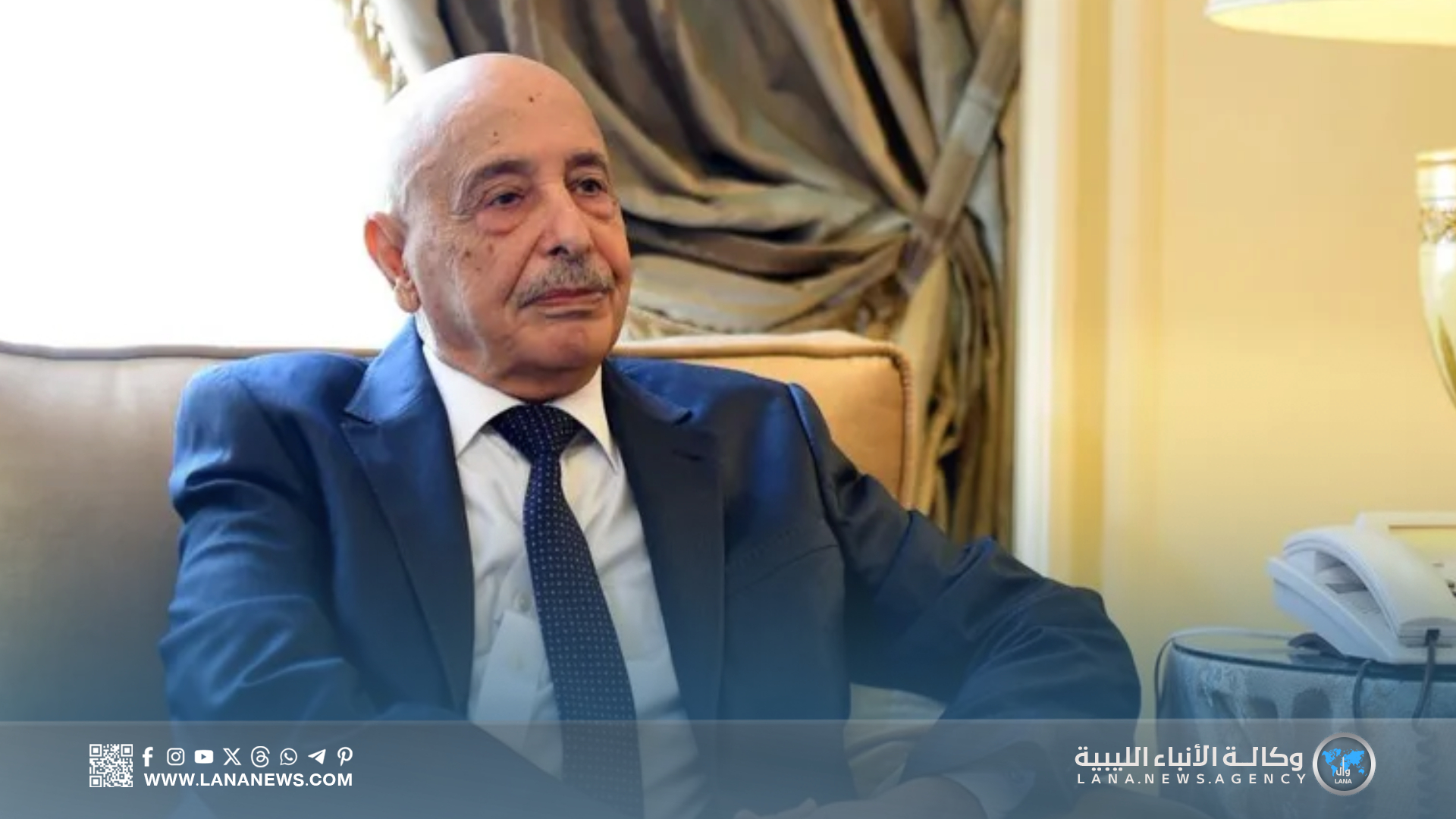
Benghazi, January 5, 2026 (LANA) – Speaker of the House of Representatives, Aguila Saleh, accused the head of the High Council of State, Mohamed Takala, of obstructing the electoral process.
This came in response to criticisms leveled by Takala against the House of Representatives' decision to complete the board of directors of the High National Elections Commission.
In statements to Al-Masar TV, a private channel, Saleh said that the head of the High Council of State, Mohamed Takala, "does not want Libya to emerge from its current situation," and that he is seeking to obstruct the electoral process. He added that the High National Elections Commission has proven its success by successfully conducting the previous municipal elections, and there is no need to change the head of the commission unless practical experience necessitates it.
He further stated that completing the commission's work in accordance with the recommendations of the United Nations Support Mission in Libya (UNSMIL) is essential to ensure the smooth running of the electoral process, warning against dragging the eastern, western, and southern regions into "further conflicts" that could hinder the political process.
He indicated his preference for proceeding directly to holding general elections before addressing the issue of filling sovereign positions, considering the continued disputes over these posts a major obstacle to achieving the electoral milestone that Libyans have been awaiting for some time.
Aquila pointed out that the Bouznika agreement has stalled despite the "significant concessions" made by the House of Representatives, which, he said, increases the need for national consensus and accelerating the democratic process.
He stated that the House of Representatives is committed to the stability and independence of the High National Elections Commission, calling on all parties to cooperate to overcome political differences and ensure that elections are held on schedule, thus fulfilling the will of the Libyan people and strengthening confidence in state institutions.
...(LANA)...