


Libya's Independence Day commemorates the struggle and nation-building journey.
Pulbished on: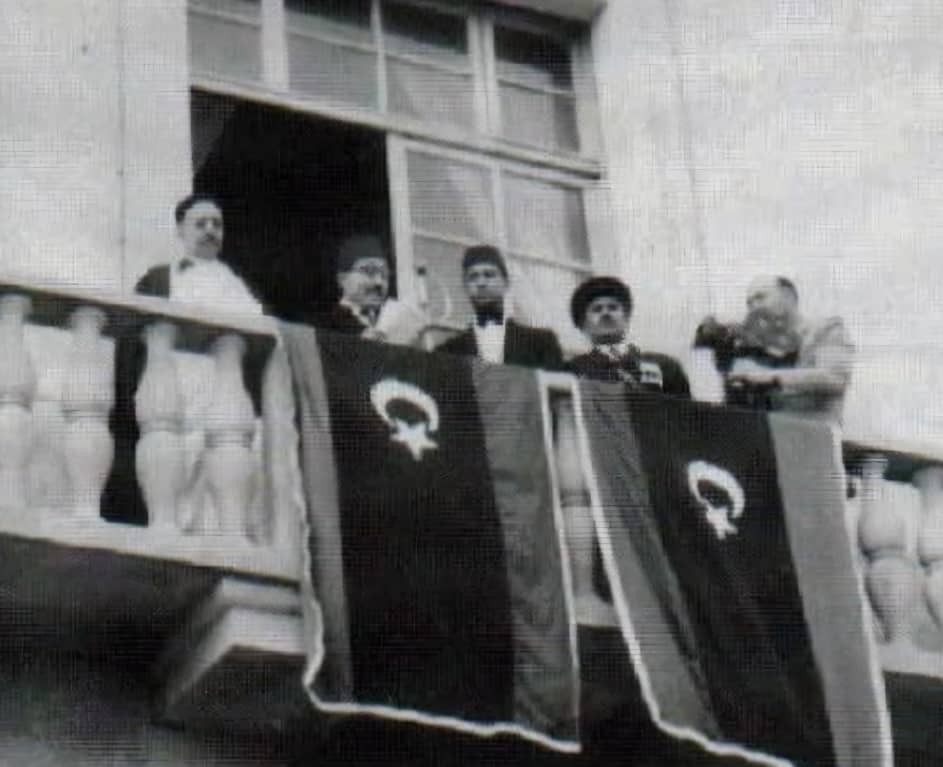
Report by Ahlam Al-Jabali
Benghazi, December 24, 2025 (LANA) – The 74th anniversary of Libya's independence arrives, recalling one of the most deeply etched moments in the national memory. On the morning of December 24, 1951, King Idris Al-Sanusi, may God have mercy on him, declared the birth of the independent Libyan state from the balcony of Al-Manar Palace in Benghazi, after decades of occupation, suffering, and struggle.
On that winter morning, the palace courtyard was crowded with Libyans, weary from waiting, who pinned their hopes on this long-awaited moment. The declaration was not merely a political statement, but the end of a colonial era and the beginning of a new one, cementing Libya's sovereignty and unity on the world map.
The head of the History Department at the Faculty of Arts, University of Benghazi, Allam Al-Fallah, confirmed in a statement to the Libyan News Agency that the declaration of independence was not a fleeting, protocol-driven event, but rather the culmination of a long struggle for which Libyans paid with blood, displacement, and unwavering patience.
He explained that the story's roots trace back to the Italian invasion of Libya on October 5, 1911, noting that Libyans confronted the occupation with fierce national resistance that lasted nearly thirty years and witnessed intense battles across the country.
He added that the banner of resistance was initially carried by Commander Ahmed al-Sharif al-Sanusi, then passed on to the martyr Sheikh Omar al-Mukhtar, along with a select group of national leaders, including Suleiman al-Barouni, Ahmed al-Marid, Abdul Nabi Bal-Khair, Ramadan al-Suwayhli, Ahmed Saif al-Nasr, and other resistance figures who faced the machinery of colonialism with unwavering determination and sacrifice.
The head of the History Department pointed out that the Libyan struggle was not limited to armed resistance, but extended to political and intellectual work through a series of national conferences aimed at consolidating unity and defining the national position. Among the most prominent of these were the Al-Aziziyah Conference in 1912, the First Misrata Conference in 1918, the Gharyan Conference in 1920, the Sirte Conference in 1922, the Victoria Conference in Alexandria in 1939, the Cairo Meeting in 1940, the Second Misrata Conference in 1949, and the Tajoura Conference in 1950.
Al-Fallah explained that the martyrdom of Sheikh Omar al-Mukhtar in 1931 marked a painful turning point in the resistance movement, as the mujahideen dispersed. This prompted Prince Idris al-Sanusi and the Libyan leaders in exile to intensify their political activity, especially with the outbreak of World War II.
He explained that the Libyans allied themselves with the Allied forces and actively participated in the North African campaigns, which culminated in the Allied victory in 1943, particularly the Battle of El Alamein, which shifted the balance of power in the region and paved the way for a new phase in the Libyan struggle.
He added that the post-war period witnessed the emergence of Libyan political parties and organizations that demanded independence and national unity, emphasizing that these forces, despite their differences regarding the form of government, were united in their goal of Libyan independence.
These efforts culminated in presenting the Libyan issue to the League of Arab States and the United Nations, resulting in UN Security Council Resolution 289 on November 21, 1949, which stipulated Libya's independence no later than January 1, 1952.
Allam Al-Fallah emphasized that Libyans moved swiftly to implement the international resolution, forming the Committee of Twenty-One, followed by the National Constituent Assembly, from which the Constitutional Drafting Committee emerged. He explained that the Libyan constitution was considered at the time one of the most advanced federal constitutions and formed the legal basis for the establishment of the state.
Al-Fallah concluded by affirming that fulfilling these requirements paved the way for the historic moment when Libya's independence and sovereignty were declared on December 24, 1951.
He stressed that independence was not a gift, but rather the fruit of the Libyan people's sacrifices and will, calling for commemorating this anniversary to strengthen national unity and protect the country's sovereignty.